


Government is targeting real GDP growth of at least 5.2% in 2027 as it shifts focus from stabilisation to investment-led growth under the New Economy Programme.

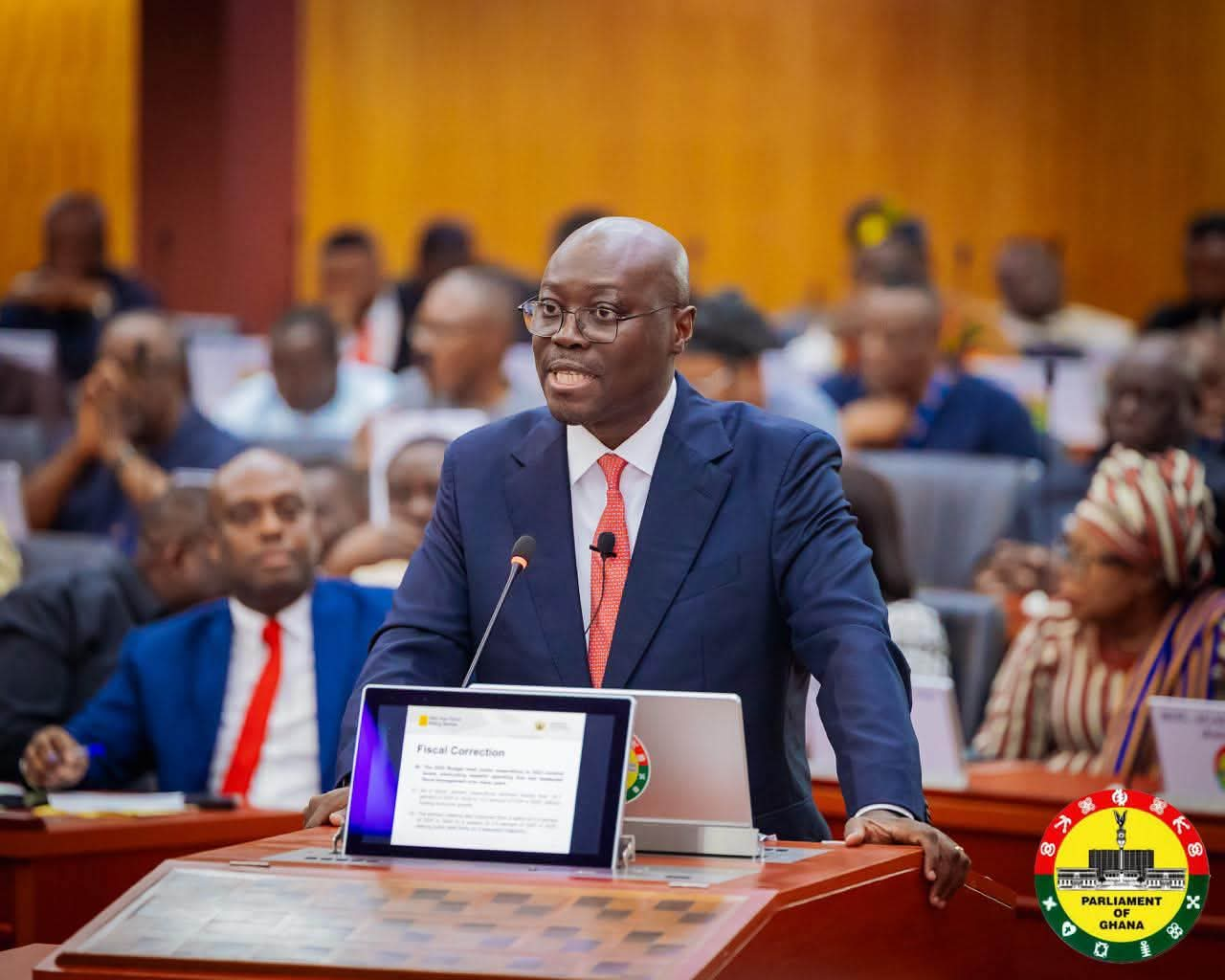
The Finance Minister, Dr Cassiel Ato Forson, announced the new macroeconomic targets while presenting the 2027 Budget to Parliament on Thursday, November 12.
The targets include a higher growth ambition, a lower primary surplus and stronger international reserves. The 5.2% growth target compares with the 4.8% programmed for 2026.
It follows provisional growth of 6.2% recorded in the first half of this year. For the non-oil economy, government is targeting growth of at least 5.7% in 2027, up from the 4.9% target for 2026.
The sector recorded provisional growth of 5.9% in the first half of 2026.On fiscal policy, government plans to reduce the primary surplus target from 1.5% of GDP in 2026 to at least 0.5% in 2027.
The adjustment signals a shift towards creating more room for capital investment and infrastructure development under the New Economy Programme.
Government is also projecting an overall fiscal deficit of 2.9% of GDP on a commitment basis, equivalent to GH¢51.9 billion.
On a cash basis, the deficit is expected to reach 3.6% of GDP, or GH¢65.8 billion. These targets represent a wider deficit than the provisional outturns recorded between January and October 2026, when the commitment-basis deficit stood at 1% of GDP and the cash-basis deficit at 2.3%.On inflation, government is targeting 8% in 2027, maintaining its commitment to single-digit inflation.
This compares with the 5.5% year-on-year rate recorded in October 2026.Government also intends to strengthen the country’s external position, targeting gross international reserves equivalent to at least six months of import cover.
That would be an improvement on the 4.5 months of import cover, valued at US$12.7 billion, recorded at the end of September 2026.
On public debt, government is targeting a reduction to 45% of GDP in 2027, from the provisional 47.5% recorded in October 2026.The targets point to a broader policy balancing act: sustaining the gains from economic stabilisation while creating fiscal room for infrastructure and productive-sector investment.


