


By Juliet Akosua Danquah

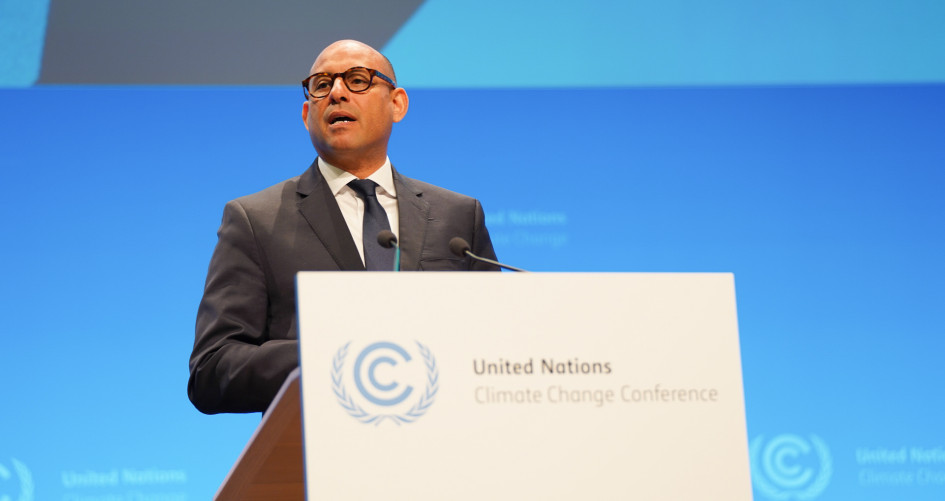
UN Climate Change Executive Secretary, Simon Stiell, has stated that action on methane offered the fastest, cheapest and most effective way to slow global heating in the near term.
He was speaking at the COP31 Leaders-Level Non-CO₂ Greenhouse Gases Summit on Thursday, November 12.
The summit was held on the sidelines of COP31, the 31st Conference of the Parties to the UN Framework Convention on Climate Change, taking place in Antalya, Türkiye, from November 9 to 20, 2026.
It was convened by the governments of China and the United Kingdom (UK), together with the COP30 and COP31 Presidencies, to build political momentum on tackling non-CO₂ gases – often called super pollutants.
These include methane, black carbon, nitrous oxide, hydrofluorocarbons and sulphur hexafluoride. Though they stay in the atmosphere for a shorter time than carbon dioxide, they warm the planet far faster in the near term.
The summit formed part of COP31’s broader push on electrification, circularity, waste and methane – key priorities of the Turkish Presidency aimed at turning national climate pledges into practical, investable action.
“In a world of suffocating disasters, action on methane offers breathing space,” Mr Stiell said.
He warned that climate-driven destruction is wrecking lives, ripping livelihoods apart and driving inflation, and that the higher temperatures rise, the worse it will get.
According to him, cuts to methane and other super pollutants provide rapid results essential to limiting near-term temperature rise and keeping overshoot of the 1.5°C limit as short and small as possible.
“For small island states like mine, methane reduction buys us time,” he said, adding it must be accompanied by rapid action on carbon dioxide.
He also said 70% of methane emissions in the oil and gas sector can be eliminated using existing technology, much of it at low or no net cost, while 75% of methane reductions in the solid waste sector can even save money.
Mr Stiell cited UNEP and Climate and Clean Air Coalition findings that every dollar invested in key super-pollutant solutions delivers $15 in economic gains.
“In oil and gas production, 167 billion cubic metres are flared every year. That’s $54 billion in lost energy value. And that’s money going up in smoke,” he said.
He noted that over 90% of parties, representing around three-quarters of global methane emissions, have included measures to reduce them in their new national climate plans.
“The task now is to turn those plans into action,” he said.
He therefore urged leaders to make methane and super-pollutants a priority, boost public and private finance, invest in institutions and capacity and use the new UN carbon market, the Paris Agreement Crediting Mechanism.
He lamented that in 2023, just half a percent of climate finance for emissions reductions went to super pollutants.”Super pollutants are a supersize opportunity. And it’s low hanging. For the climate, for economies, and for human health. So let’s take advantage of it,” he said.
The summit also announced over US$480 million in new philanthropic funding to accelerate action on methane across energy, agriculture and waste, alongside black carbon, clean cooking, transport and cooling.
Seven additional countries – Côte d’Ivoire, Ethiopia, Fiji, Morocco, Pakistan, the Philippines and Uzbekistan – joined the Super Pollutant Country Action Accelerator, doubling its reach to 14 countries, with a target of 30 by 2030.
The Accelerator received US$25 million.Australia also endorsed the UK-led Statement on Drastically Reducing Methane Emissions in the Global Fossil Fuel Sector, while Germany highlighted a new Global SF₆ Pledge to cut sulphur hexafluoride emissions, with support from the UK and European Commission.


