


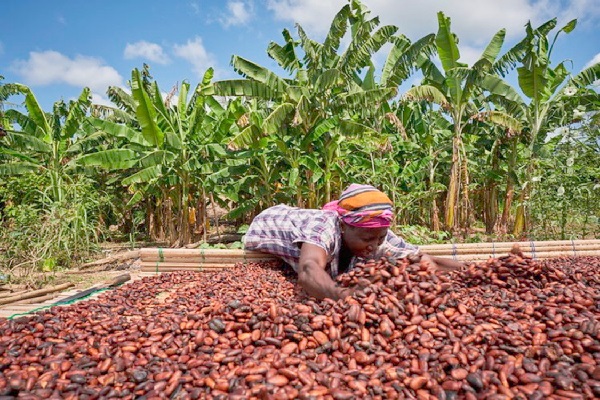
The Institute of Economic Research and Public Policy (IERPP) has cautioned that recent developments in Ghana’s cocoa sector could pose serious risks to the country’s economy and national security following the government’s decision to reduce the cocoa producer price from GH₵3,625 to GH₵2,587.

In a statement signed by its Executive Director, Isaac Boadi, the institute said the price reduction has been strongly rejected by cocoa farmers, many of whom have questioned the government’s justification for the adjustment.
According to IERPP, the decision could have far-reaching consequences for the cocoa industry and the broader economy if urgent steps are not taken to address stakeholder concerns.
The institute noted that more than one million Ghanaians are directly engaged in cocoa production and related activities, warning that the lower price could discourage farmers from continuing in the sector while also deterring new entrants.
It further cautioned that some farmers may abandon cocoa cultivation altogether, potentially resulting in job losses and social challenges in cocoa-growing communities.
IERPP also raised environmental concerns, suggesting that reduced profitability in cocoa farming could push some farmers toward illegal mining activities, commonly known as galamsey, or encourage them to sell their lands to illegal miners.
Ghana has in recent years grappled with significant environmental degradation linked to illegal mining, making the situation particularly concerning, the institute said.
Describing cocoa as a historic pillar of the national economy, IERPP stressed that any sustained disruption in the sector could undermine economic stability. Cocoa has long been one of Ghana’s major foreign exchange earners, alongside gold and, more recently, oil.
The institute is therefore urging the government to take immediate action to ease tensions within the sector, including reconsidering the revised producer price.
IERPP specifically called for a restoration of the previous price of GH₵3,625, arguing that such a move could help prevent potential economic and security repercussions.


