


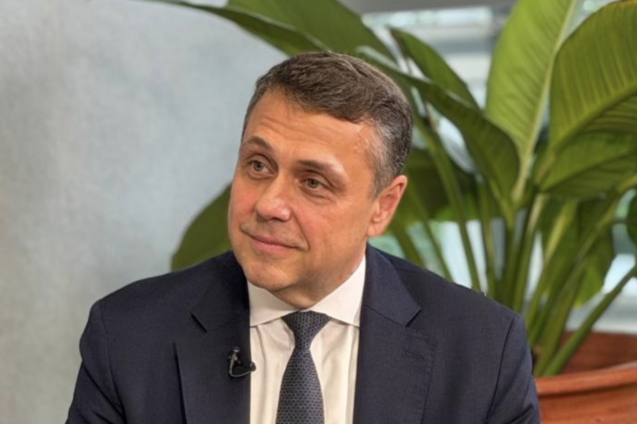
The International Monetary Fund says Ghana is close to completing its banking sector clean-up, with only a few financial institutions remaining to be fully stabilised under ongoing reforms.

Speaking on PM Express Business Edition on Thursday, IMF Mission Chief for Ghana, Ruben Atoyan, expressed confidence that the country’s banking sector reforms have largely succeeded in restoring capital adequacy across the financial system.
Responding to concerns about possible government action involving a specific financial institution, Dr Atoyan stated, “Well, you didn’t name the bank, so I’m not sure what exactly you’re talking about.”
He explained that Ghana’s financial sector reforms must be viewed within the context of the impact caused by the Domestic Debt Exchange Programme (DDEP), which significantly weakened the balance sheets of many banks and left several institutions undercapitalised.
“But I think let’s step back and look at what was an important objective for the financial sector reforms, the impact of domestic debt restructuring resulted in significant destruction of capital for the domestic banking system,” he said.
According to Dr Atoyan, the authorities responded with a recapitalisation programme that has helped restore most banks to the required prudential standards.
“So many banks were undercapitalised. What the authorities have done has been quite successful during the programme, bringing banks back to full capital adequacy in line with prudential requirements,” he stated.
He added that the clean-up process has nearly been completed, with only a small number of banks still undergoing recapitalisation or resolution measures.
“That has been achieved almost for all the banks, for a couple of banks remaining,” he noted.
Dr Atoyan further expressed optimism that Ghana’s banking sector reforms would be fully concluded before the end of the IMF-supported programme.
“We do expect that by the end of the programme, the banking sector will be robust,” he stressed.
Ghana’s banking industry has undergone major restructuring in recent years following the sovereign debt crisis and the Domestic Debt Exchange Programme, which exposed vulnerabilities in several financial institutions and triggered regulatory interventions aimed at restoring stability.
According to the IMF, the reforms have strengthened the resilience of the banking sector and positioned it for a more stable post-programme phase.


