


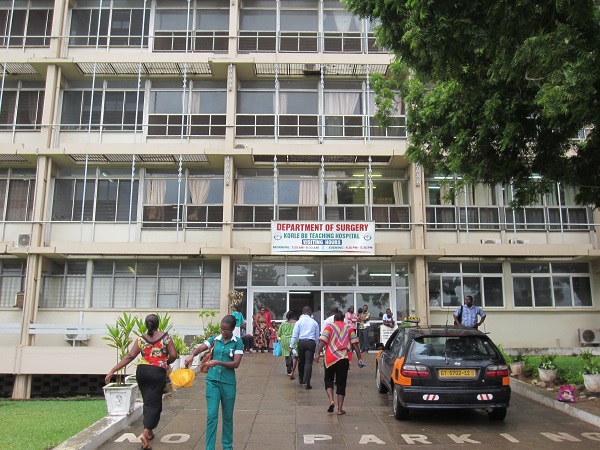
The Korle-Bu Doctors’ Association (KODA) has raised alarm over worsening conditions at the Accident and Emergency Centre of Korle-Bu Teaching Hospital, warning that overcrowding is putting both patient safety and staff wellbeing at serious risk.

In a statement issued on Monday, March 23, KODA said increasing patient numbers and administrative pressures are forcing healthcare workers to deliver care in unsafe and improvised environments.
KODA Chairman, Dr Asare K Offel, described the situation as unsustainable, noting that it threatens patient outcomes as well as the professional integrity of medical staff.
While reaffirming their commitment to the “No Bed” policy—under which no patient is turned away from emergency care—the association said the lack of space has compelled doctors to treat patients in hallways, on chairs, and even on the floor.
According to KODA, the overcrowding is having several critical consequences. Patient safety is being compromised due to delays in urgent care, weakened infection control, and a higher risk of medical errors. At the same time, doctors face heightened medico-legal risks when forced to provide treatment in substandard conditions, particularly if complications arise.
The association also highlighted the severe physical and mental strain on healthcare workers, citing growing burnout and injuries such as spinal strain from prolonged bending and squatting during treatment.
KODA’s concerns follow a recent visit to the emergency department by the Minister of Health and hospital management on March 21, prompted by a viral video showing patients being treated in overcrowded conditions. Although the minister reportedly found the situation relatively normal and questioned the accuracy of the footage, KODA insisted that such conditions are routine.
The association stated that environments are often temporarily improved ahead of official visits and may not reflect the day-to-day reality at the facility.
It further argued that the “No Bed Syndrome” extends beyond bed shortages, pointing to broader systemic issues such as weak referral systems and limited capacity at other hospitals, which continue to channel patients to Korle-Bu.
KODA has urged the Ministry of Health and hospital management to take responsibility and implement lasting solutions rather than assigning blame.
Among its recommendations, the association called on staff to properly document cases handled under compromised conditions, formally report resource shortages, and maintain safety and ethical standards despite operational pressures.
It also appealed to management to strengthen referral coordination, provide additional resources and temporary holding areas, and offer legal protection for staff working under these challenging circumstances.
While acknowledging initial steps taken by authorities to address the crisis, KODA stressed the need to move beyond short-term fixes toward comprehensive reforms. It noted that long-term solutions proposed by the Ghana Medical Association and other stakeholders require strong political will to implement.
The association says it remains open to dialogue aimed at preventing avoidable deaths and safeguarding healthcare workers.


