


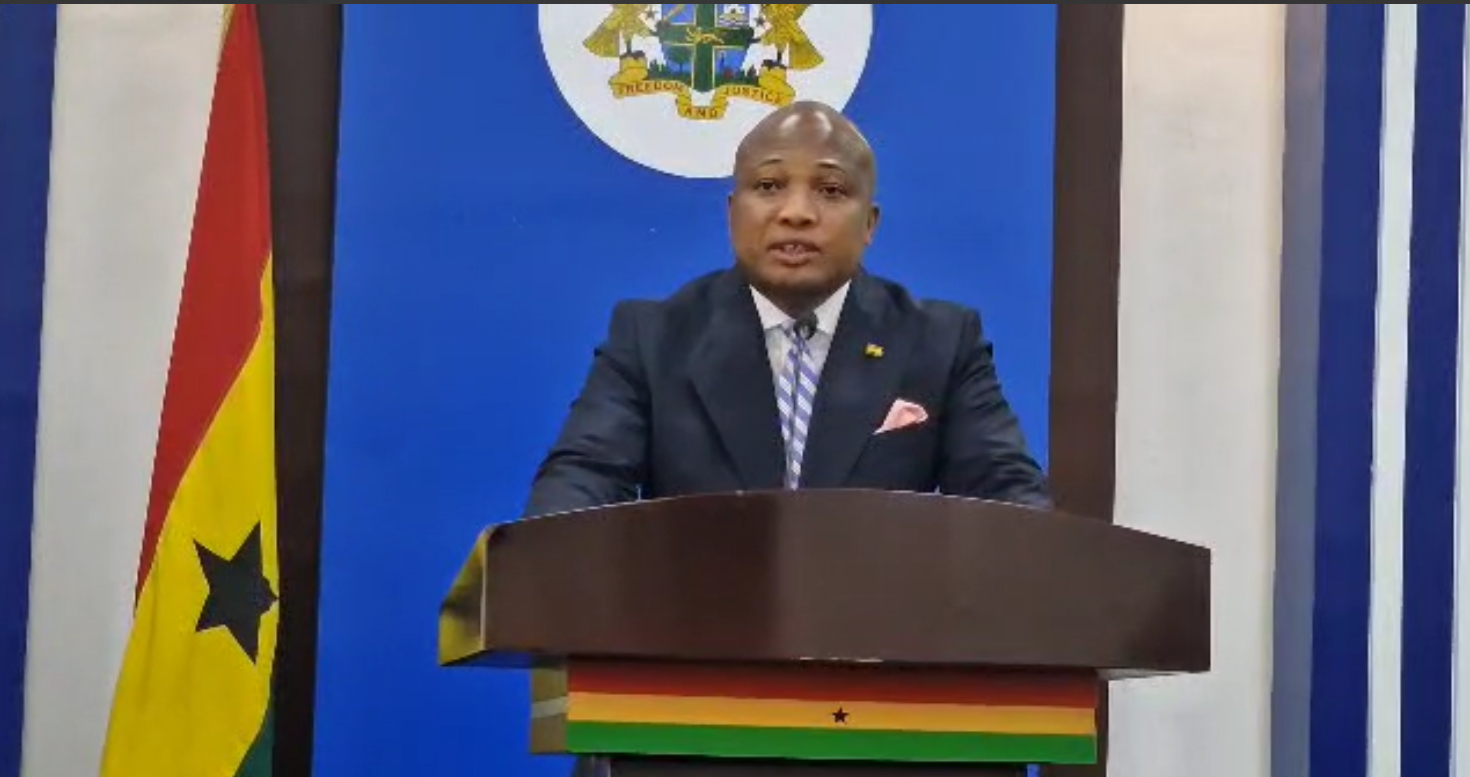
The Minority in Parliament has questioned the legal basis for Foreign Affairs Minister Samuel Okudzeto Ablakwa’s demand for former Ghanaian Ambassador to the United States, Hajia Alima Mahama, to refund monies linked to activities at the Ghana Embassy in Washington.

Ranking Member of Parliament’s Foreign Affairs Committee, Samuel A. Jinapor, said the demand raises concerns about due process and appears to cover expenditure incurred outside the former ambassador’s tenure.
In a statement issued on Tuesday, the Damongo MP said the Minority supports efforts to promote accountability and recover public funds but insisted that any such action must strictly comply with the Constitution and applicable laws.
Minority questions surcharge authority
The concerns follow a Special Audit Report by the Auditor-General on the Ghana Embassy in Washington covering the period from January 2017 to June 2025.
The audit examined alleged financial and operational irregularities at the mission.
Following the report, Foreign Affairs Minister Samuel Okudzeto Ablakwa wrote to Hajia Alima Mahama demanding a refund of monies allegedly arising from the audit findings.
The Minority, however, is challenging the legal procedure used by the Minister to make the demand.
According to the caucus, the constitutional authority to disallow expenditure and impose surcharges rests with the Auditor-General.
“Article 187 of our national Constitution establishes the Office of the Auditor-General and guarantees its independence. The power of disallowance and surcharge following an audit is vested solely in the Auditor-General under Article 187(7),” the statement said.
The Minority consequently questioned the authority under which the Foreign Affairs Minister demanded that the former ambassador refund the money.
It further argued that where the Auditor-General imposes a surcharge, the affected person is entitled to 60 days within which to either pay the amount or appeal the decision before the High Court.
“The procedure adopted by the Hon. Minister for Foreign Affairs seeks to circumvent this laid procedure and curtail the former Ambassador’s appeal against surcharges,” the statement said.
Mahama says she was not given opportunity to respond
Mr Jinapor also raised concerns over claims by Hajia Alima Mahama that she was not given an opportunity to respond to the audit findings before the demand was made.
The Minority quoted the former ambassador as saying:
“The auditors neither spoke to me nor wrote to me to respond to any issue/observation.”
The caucus argued that principles of natural justice and due process require an affected person to be given an opportunity to respond before adverse findings are finalised against them.
Questions over period covered by demand
The Minority also questioned why the demand appears to relate to embassy activities spanning several years, including periods before and after Hajia Mahama’s tenure as ambassador.
Hajia Alima Mahama was appointed Ghana’s Ambassador to the United States in June 2021, after serving as Minister for Local Government and Rural Development from 2017 to 2021.
According to the Minority, the audit covers a broader period than her tenure and does not establish that all the amounts being demanded arose while she was ambassador.
“Nowhere in the audit report is it suggested that the amounts being demanded occurred only during the tenure of Ms. Mahama,” the statement said.
It questioned why the former ambassador should be held responsible for expenditure or irregularities that allegedly occurred before she assumed office or after she left.
“Why will the former Ambassador be held accountable for matters that occurred prior to her assumption of office and those that occurred after leaving office?”
Audit report yet to be laid before Parliament
The Minority further noted that the Special Audit Report had not been laid before Parliament at the time of its statement.
It argued that the report ought to be laid before Parliament in accordance with Section 16 of the Audit Service Act.
The caucus also disputed the basis for holding the former ambassador personally liable, arguing that no personal or joint liability had yet been formally established against her.
“This demand is, also, being made on the former Ambassador when no personal or joint liability has been established against her,” the statement added.
Minority insists on due process
The Minority accused the government of repeatedly taking steps ahead of established legal procedures and publicly pronouncing individuals culpable before the relevant processes have been completed.
It maintained that accountability for public funds is important but cannot come at the expense of constitutional safeguards.
“The procedures prescribed by our Constitution and laws are not technicalities to be dispensed with when inconvenient,” it said.
The caucus therefore reiterated its support for lawful efforts to recover public funds but insisted that any recovery process must be grounded in the Constitution, respect due process and provide affected persons with the opportunity to challenge adverse findings.


