


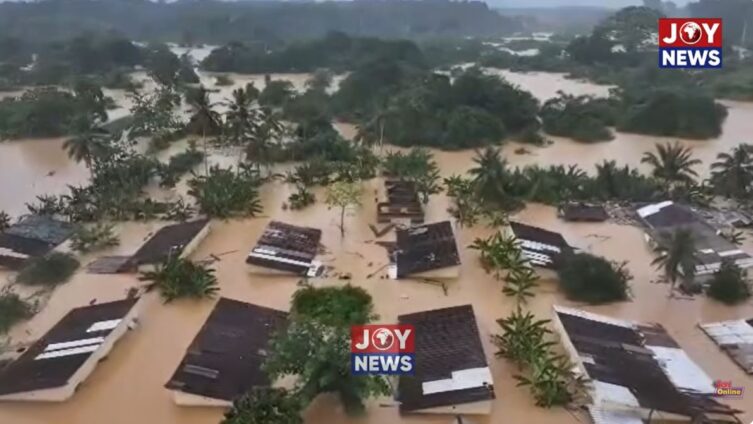
Hundreds of families in Samreboi in the Western Region are facing severe hardship after devastating floods displaced more than 2,000 residents, destroyed homes and personal belongings, and disrupted economic activities across the community.

The floods, triggered by days of persistent rainfall, have left many residents homeless and reliant on limited relief supplies as they appeal for assistance from government agencies, humanitarian organisations and well-meaning individuals.
Many victims say they have lost virtually everything and are struggling to rebuild their lives.
One displaced resident, overwhelmed by emotion, described the extent of the devastation and appealed for urgent support.
“I don’t even know where to go. My only option is to stay with others. Please, I need help. All my belongings are destroyed, including my clothes. Look at the clothes I’m wearing. The government should please come to our aid,” the resident said.
Another victim expressed concern about the inadequate relief supplies available to affected families.
“The gari and fried fish being shared are too small to satisfy us. We need help,” the resident lamented.
The flooding submerged homes, shops and farmlands, destroying sources of income and forcing many families to seek temporary shelter in schools, churches and the homes of relatives.
Local authorities and officials from disaster management agencies have begun assessing the damage as calls intensify for immediate intervention to provide food, clothing, clean drinking water, medical assistance and temporary accommodation for affected residents.
During a visit to the community, Western Regional Minister Joseph Nelson attributed the recurring flooding largely to environmental degradation caused by illegal mining, popularly known as galamsey.
According to him, the destruction of natural ecosystems and water bodies through illegal mining activities has increased the area’s vulnerability to flooding and placed residents at greater risk.
“We have to be careful, and if something has to be done, government will always take the lead, but the people themselves must also be part of the solution,” he said.
Mr Nelson also expressed concern about what he described as a growing culture of silence and indifference toward environmental destruction within communities.
“It has become a norm that when things happen in communities, people look on unconcerned. They don’t talk about it and they don’t speak against it,” he noted.
Reflecting on the area’s environmental transformation over the years, the Minister lamented the loss of natural resources that once supported local livelihoods.
“Many of you here, growing up, saw how the canal used to be. We used to fish in it, travel on it and enjoy all the benefits it provided. Today, those benefits are disappearing because of our actions,” he stated.
Residents have since appealed to government, corporate institutions, non-governmental organisations and philanthropists to provide urgent relief and support recovery efforts as the community works to recover from the disaster.
The flooding has once again renewed concerns about the environmental consequences of illegal mining and the need for stronger measures to protect communities from recurring natural disasters linked to human activities.


