


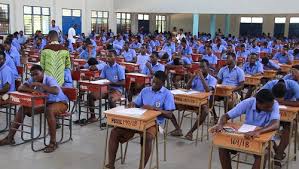
A total of 473,658 final-year senior high school students in Ghana will participate in the 2026 May–June West African Senior School Certificate Examination for School Candidates, rejoining four other West African countries after a five-year hiatus.

The return to the regional examination format follows Ghana’s decision to previously administer a local version due to disruptions caused by the COVID-19. This year, candidates will sit the examination alongside their counterparts in Liberia, The Gambia, Nigeria, and Sierra Leone.
The Ghanaian candidates comprise 248,461 males and 225,197 females from 1,020 public and private second-cycle institutions, representing a 2.58 per cent increase over the 2025 figure of 461,736.
The Head of Public Affairs at the West African Examinations Council, John Kapi, disclosed this during a briefing on preparations for Ghana’s return to the international examination schedule.
He explained that the council has commenced key processes for the conduct of the examination, including the ongoing printing of examination materials.
“Simply, it means that we are all writing at the same time. That is all; nothing has changed,” he noted, emphasising that the examination remains international in structure and administration.
Mr Kapi highlighted that all member countries are involved in critical stages of the examination process, including the moderation of questions, compilation of papers, and determination of marking schemes.
He added that, after the examination, a joint panel comprising representatives from member states reviews marking schemes and determines grade boundaries, from A1 to F9. These collaborative processes also underpin regional recognition mechanisms such as excellence awards.
Unlike in recent years when Ghana conducted the examination ahead of other countries, all participating states will now follow a unified timetable, starting and concluding simultaneously.
On security arrangements, Mr Kapi outlined a range of measures implemented to safeguard the integrity of the examination. These include strict access controls at printing facilities, continuous surveillance through closed-circuit television systems, and the deployment of security personnel, including officers from the police and national security agencies.
He noted that examination materials are securely packaged and monitored at designated depots, with additional oversight at examination centres to prevent malpractice.
Mr Kapi further appealed to stakeholders—including teachers, students, parents, and community leaders—to support efforts to uphold the credibility of the examination.
Describing examination malpractice as a potential national security concern, he warned that dishonest practices in education could have long-term societal implications.
As part of preventive measures, he indicated that the council will implement the serialisation of examination questions, a system designed to minimise opportunities for cheating.
He urged collective responsibility in ensuring that the examination is conducted in a fair and transparent manner.


