


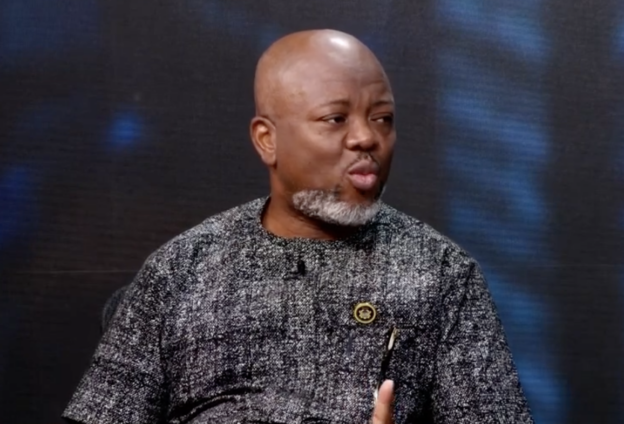
A member of the National Democratic Congress (NDC) legal team, Victor Kwadjoga Adawudu, has attributed many arrests made under Ghana’s offensive conduct laws to what he described as “overzealous” police officers rather than a deliberate government policy.

Speaking on Joy News’ PM Express on Tuesday, Mr Adawudu argued that the Criminal Offences Act provisions on offensive conduct should not be weaponised against citizens but applied cautiously and only in appropriate circumstances.
His comments come amid public debate following the conviction of 43-year-old TikToker Camilla Alhassan, who was sentenced to one year’s imprisonment with hard labour after pleading guilty to offensive conduct conducive to breaches of the peace for making offensive and derogatory remarks about President John Mahama in a TikTok video.
The conviction has drawn criticism from the New Patriotic Party (NPP), which has described the sentence as an attack on free speech and pledged to support Alhassan’s appeal. The party has also urged civil society organisations, the Ghana Bar Association, the National Peace Council, the media and the diplomatic community to speak against what it calls the criminalisation of free expression.
Asked whether the offensive conduct provisions should be repealed, Mr Adawudu said the decision ultimately rests with the Ghanaian public.
“Yes, if that is the sentiment of the populace, that they want this to be repealed,” he said.
However, he maintained that the law still serves an important purpose in deterring unacceptable conduct, particularly on social media.
“Whilst this law should be there to serve as a deterrent to others… people who say unprintable things… there is a law that can catch up,” he stated.
Rejecting suggestions that the legislation criminalises free speech, Mr Adawudu argued that many comments made on social media go beyond legitimate expression.
“I think most of the things you see on social media this time are unprintable,” he said, adding that some political activists deliberately post insulting content to attract public attention.
“It has become a route for party devotees to use it as a claim to fame. So now they go say things unprintable, insult others, insult leaders, and at the end of the day, they have a brush with the law,” he said.
Mr Adawudu observed that both the NDC and the NPP have, at different times, defended supporters arrested under the law because such cases often generate political sympathy.
“It’s not just that you weaponise and use it against each other,” he cautioned.
Responding to claims that the offensive conduct law has been invoked at least 15 times under the current administration, Mr Adawudu argued that many of the arrests are initiated by individual police officers acting independently.
“Normally from where I sit and what I know, it is some overzealous policemen… some overzealous policemen and law enforcers feel that this is what we do,” he said.
He added that in many instances, senior police leadership may not even be aware of the arrests before suspects are processed through the courts.
Drawing on his experience as a defence lawyer during the previous NPP administration, Mr Adawudu said he represented several individuals charged under the same provisions, including Bobbie and Oheneba, giving him firsthand knowledge of how the law has been enforced.
He also questioned the effectiveness of the legislation, arguing that many prosecutions fail to progress after accused persons are granted bail.
“For what I can see from my practice is that most of the charges that they use this Section 207, 208… when bail is granted, it fizzles out,” he said.


