


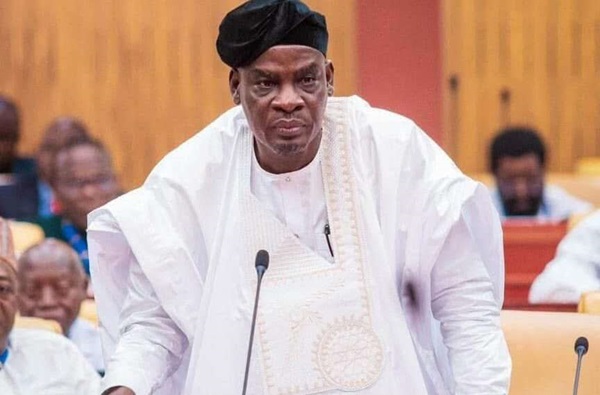
The Parliament of Ghana has passed the Education Regulatory Bodies (Amendment) Bill, 2026, making the acquisition of a Presidential Charter optional for private universities.

The amendment also removes the previous requirement that institutions must obtain a charter within six years.
Speaking during the second reading of the bill, the Minister for Education, Haruna Iddrisu, said the earlier law created practical challenges for many private universities.
He explained that the Education Regulatory Bodies Act, 2020 (Act 1023) made it compulsory for private institutions to secure a Presidential Charter within six years.
According to the minister, the requirement was inconsistent with previous practice under the National Accreditation Board, where obtaining a charter was optional.
Mr Iddrisu also noted that the rule placed heavy financial pressure on institutions because of the fees paid to the Ghana Tertiary Education Commission (GTEC).
He warned that enforcing the requirement could have forced several private universities to close, affecting thousands of students.
The minister said more than 79 private tertiary institutions currently operate in Ghana and have played an important role in expanding access to higher education.
Under the amendment, private universities will only apply for a Presidential Charter when they believe they have met the requirements to operate independently and award their own degrees.
Despite the change, Mr Iddrisu assured Parliament that regulatory oversight will continue through accreditation, programme approval and academic audits by the Ghana Tertiary Education Commission.
The Education Committee of Parliament also supported the amendment, noting that the earlier rule risked disrupting the education of many students if some institutions were forced to shut down.
Government says the reform is part of broader efforts to strengthen the tertiary education sector while recognising private universities as key partners in expanding access to higher education.


