


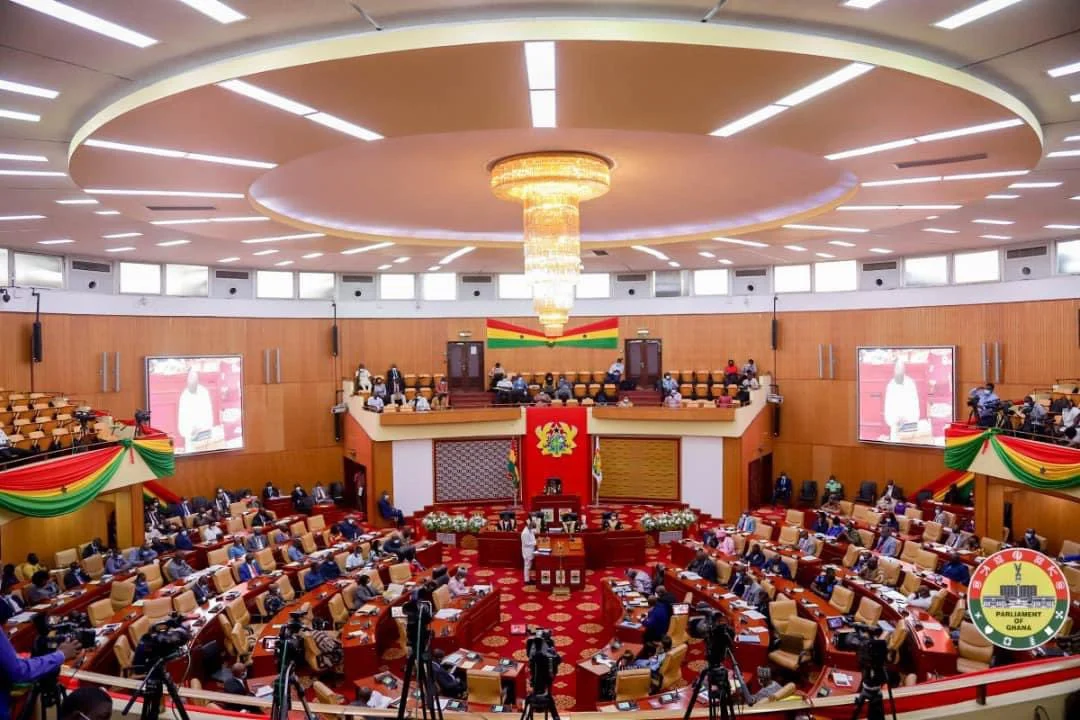
Parliament has passed the Legal Education Reform Bill, 2025, a move aimed at widening access to professional legal education in Ghana and breaking the long-standing monopoly of the Ghana School of Law.

The Bill provides for the establishment of a Council for Legal Education and Training to regulate professional legal education, set curriculum standards, and accredit institutions to offer law practice programmes.
If assented to by President John Mahama, it will allow other universities, including private institutions, to provide professional legal education, offering aspiring lawyers broader opportunities to qualify for the Bar.
Under the new framework, candidates will undertake a Law Practice Training Course at accredited universities before sitting for a National Bar Examination.
The course will prioritise practical lawyering skills and clinical legal education, moving beyond purely theoretical instruction. Only holders of a Bachelor of Laws degree—or other approved law degrees—will be eligible to enter the course and eventually sit the Bar Exam.
Attorney-General and Minister for Justice, Dominic Ayine, who presented the Bill to Parliament on October 24, 2025, noted that the reforms align with Article 25 of the Constitution, which promotes equality of opportunity for all Ghanaians aspiring to practice law.
Speaking during the second reading Dr. Ayine said the Bill would address the bottlenecks created by the Ghana School of Law’s monopoly and its highly competitive entrance examination, which often left even first-class graduates unable to gain admission.
He further explained that the accreditation system would maintain quality control, ensuring that only qualifying law faculties could train candidates for the Bar.
“We are also introducing the National Bar Exam so that those who go through the law practice training course at accredited universities can all sit a standardised exam administered by the Council for Legal Education and its Bar Examination Committee,” Dr. Ayine said.
Following the passage of the Bill, Majority Leader Mahama Ayariga described it as a fulfilment of a key National Democratic Congress (NDC) campaign promise. He emphasised that the reforms would promote fairness and equal access, saying:
“With the Bill successfully passed, we believe this marks the dawn of a new era where all students will be fairly treated. Regardless of which law school or faculty a student attends—be it Legon, UDS, UCC, or Winneba—they will all face the same National Bar Examination, where the country’s lawyers will be determined. We have kept our promise.”
Minority Leader Alexander Afenyo-Markin also acknowledged the Bill as a government success but used the occasion to criticise the administration for falling short on other promises. He cited concerns over sole sourcing, alleging that a Deputy Chief of Staff was awarded an 11 million cedi sole-sourced contract, contrary to government assurances.
“The very thing they said they would not do is what they are doing,” he said.
The passage of the Legal Education Reform Bill represents a significant step toward expanding access to professional legal training and ensuring a more equitable path to the legal profession in Ghana.


