


Story By: Dennis Ato Keelson

In commemoration of National Farmers’ Day (December 5), a leading environmental advocate has issued a passionate and urgent plea, reframing the occasion not merely as a celebration, but as a critical call to action for the nation’s food producers.
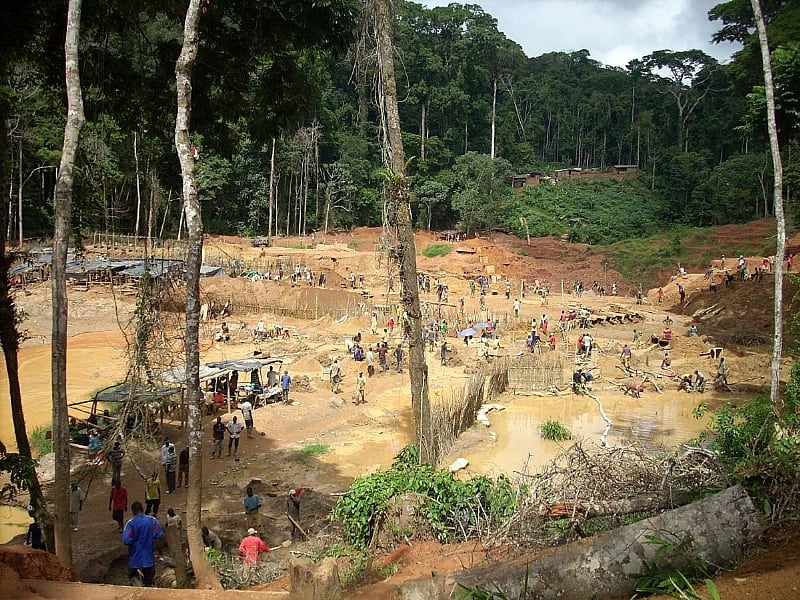
The Director of the Rights of Nature Ghana Movement (RoNAG) and Senior Lecturer at the Kwame Nkrumah University of Science and Technology (KNUST), Dr. Dickson Adom, urged farmers in the country to see themselves not only as food producers, but as the last line of defence against the existential threat of illegal mining, popularly known as ‘galamsey.’
In a statement, he declared, “Do not trade your children’s inheritance for a stranger’s pocket change. The lump sum from galamsey operators is a poisoned chalice, promising escape from poverty but delivering permanent destruction. Your true wealth lies not in fleeting cash, but in the fertile land you hold in trust.”
He outlined the catastrophic and multifaceted costs of selling ancestral farmlands for galamsey, emphasising that the celebration on December 5 must be rooted in the courage to resist and the wisdom of indigenous stewardship.
Dr. Adom dismantled the illusion of short-term gain, stating, “Agriculture is an intergenerational covenant. Selling your farm is not a business transaction; it is a generational betrayal.”
He explained that while the money disappeared quickly, the loss was permanent, bemoaning that “Farmers are left with no livelihood support after the money is gone.”
“…They trade a century of sustenance for two years of spending, condemning their families to deeper poverty,” he noted.
This, he warned, directly threatened the food security of the entire nation.
He further described the environmental destruction as a violent assault.
“Galamsey operators are enemies of nature. They strip her of her dignity, poison her rivers—our collective lifeblood—and leave a scar that may last forever,” Dr. Adom asserted.
He highlighted the use of mercury and cyanide, which contaminate soil and water for decades. “Reclamation is a fantasy for many sites. Some injuries to the land are beyond repair. We are trading our future for a handful of today’s gold.”
Dr. Adom stressed that the consequences of galamsey were tragically personal for communities, citing disturbing findings from recent water tests conducted by his organisation near mining sites.
“The water becomes a cocktail of toxins. When the river is poisoned, poverty forces people to drink death. We see the sickness—kidney failure, skin diseases, children with impaired development. Selling your farm can mean signing a death warrant for your own community.”
Beyond the physical harm, he lamented the profound cultural loss. “These farmlands are our archives. Sacred groves, burial grounds, trees named for ancestors—they are carriers of our history. Destroying them for galamsey erases our identity for future generations.” This erasure, he added, fuels intractable conflicts within families and communities, fracturing the social cohesion that sustains rural life.
“This Farmers’ Day, the highest yield is not in cocoa or maize, but in courage. The courage to say no. To be the guardian who stood firm.”
He extended this challenge to leaders, demanding they become protectors. “Traditional authorities and MMDCEs must be shields for their people, not brokers for destruction. Anyone who pressures a farmer to sell is an enemy of our collective future.”
He concluded with a vision of resilience rooted in cultural values: “Our ancestors nurtured this land for us. Our sacred duty is to defend it with everything we have. Protecting that farmland is the most productive, honourable act of farming you will ever do. That is the true spirit we must celebrate and fight for today.”
About Dr. Dickson Adom:
Dr. Dickson Adom is the Director of the Rights of Nature Ghana Movement (RoNAG) and a Senior Lecturer in the Department of Educational Innovations in Science and Technology at the Kwame Nkrumah University of Science and Technology (KNUST), Kumasi. His work focuses on indigenous knowledge, environmental sustainability, and advocacy for the legal rights of ecosystems.


