


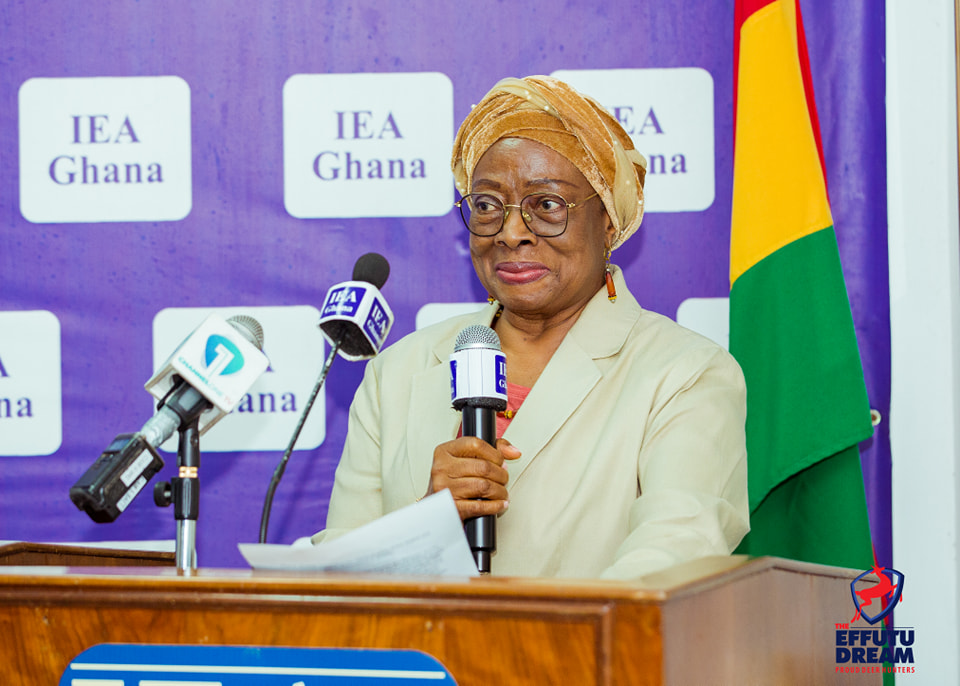
Former Chief Justice Sophia Akuffo has advocated reforms to Ghana’s constitutional framework to place clearer limits on presidential authority and strengthen checks and balances among the three arms of government.

According to her, the President must have sufficient powers to effectively govern the country, but those powers should not be exercised without meaningful constitutional constraints.
“Presidents should have powers, but they cannot be unfettered powers,” she said.
Speaking on Channel One TV on Wednesday, September 2, 2026, the former Chief Justice and Fellow at the Institute of Economic Affairs (IEA) said Ghana’s democratic system would benefit from a more effective separation of powers, with stronger mechanisms to ensure accountability across the Executive, Legislature and Judiciary.
She argued that the experience of operating the 1992 Constitution for more than three decades had exposed institutional weaknesses and constitutional gaps that should now be addressed.
While acknowledging that the Constitution had provided an important foundation for Ghana’s democratic development, she said its implementation had also produced anomalies that could undermine the sustainability of the democratic system.
“In many ways, our Constitution has worked out for us over the years of its existence; it has created a lot of anomalies which we must correct to move our democracy on to the next level for sustainability because people are getting fed up,” she said.
Ms Akuffo therefore called for constitutional reforms that would establish clearer safeguards around presidential power while reinforcing institutional independence and accountability.
She maintained that effective checks and balances were essential to preventing excessive concentration of authority and ensuring that each arm of government operates within its constitutional mandate.
For her, closing the gaps identified through years of constitutional practice is necessary to strengthen Ghana’s democratic institutions, improve accountability and restore public confidence in the country’s system of governance.


