


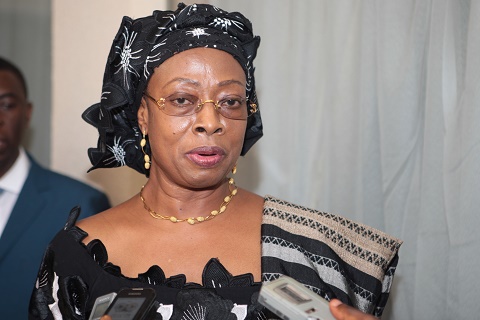
Former Chief Justice Sophia Akuffo has raised concerns over the practice of extending oil agreements years before their original terms expire, warning that Ghana risks tying itself to rigid and potentially costly arrangements.

Speaking on PM Express on Joy News with host George Wiafe, Justice Akuffo questioned the rationale behind ratifying extensions long before existing contracts run out.
She said she finds it difficult to understand why agreements with as many as 10 years remaining would be extended in advance, instead of allowing the current term to run its course before negotiating a new period to commence afterward. In her view, such extensions should not even receive parliamentary ratification.
Justice Akuffo also challenged what she described as Ghana’s rigid mindset toward contracts. According to her, agreements are often treated as though they are untouchable once signed, even when circumstances change.
She stressed the importance of incorporating clear review clauses in future agreements to allow for renegotiation under specified conditions. Without such provisions, she warned, Ghana may find itself locked into unfavourable terms while leaving room for the other party to exploit legal loopholes.
The former Chief Justice further expressed concern about arbitration arrangements that place dispute resolution in foreign jurisdictions, arguing that such setups often disadvantage Ghana. Referencing the recent arbitration involving Tullow Oil, she said the outcome raised troubling questions about the country’s legal representation and negotiation strategy. She found it contradictory, she noted, that contracts could be extended even after contentious disputes.
While acknowledging that renegotiation may be legally impossible where agreements lack review provisions, she emphasised that future contracts must be structured more carefully.
Justice Akuffo cited the agreement involving Atlantic Lithium as an example of how terms can be framed differently, particularly through mechanisms that cap or scale royalties based on price movements rather than simply increasing them.
Her message was unequivocal: Ghana must avoid binding itself to agreements that limit flexibility and expose the nation to unnecessary legal and financial risks.


