


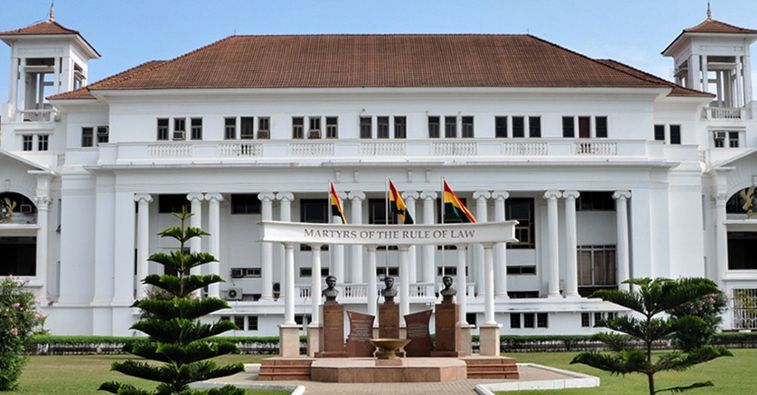
A Ghanaian citizen, Dr. Yaw Twerefour, has filed a suit at the Supreme Court challenging the constitutionality of the allocation and disbursement of District Assemblies Common Fund (DACF) monies to Members of Parliament (MPs).

Invoking the court’s original jurisdiction, Dr. Twerefour is seeking a series of declarations and orders against the Attorney-General, the Administrator of the District Assemblies Common Fund, the Minister for Local Government, Decentralisation and Rural Development, and the Minister for Finance.
The suit targets the long-standing practice of allocating portions of the DACF to MPs through arrangements such as the MPs Common Fund, Constituency Labour Projects, and Constituency Labour Monitoring and Evaluation programmes.
According to the plaintiff, these allocations are inconsistent with Article 252 of the 1992 Constitution, which establishes the DACF as a fund intended for the benefit and administration of Metropolitan, Municipal and District Assemblies.
Dr. Twerefour is asking the Supreme Court to declare that the DACF is constitutionally reserved for District Assemblies and should not be allocated to, administered by, or controlled by Members of Parliament or any other persons outside the framework established by the Constitution.
He is also seeking a declaration that any formula approved for the distribution of the DACF that earmarks a portion of the fund for MPs is unconstitutional, null and void.
A key aspect of the suit challenges the alleged practice of paying DACF monies directly into the personal bank accounts of Members of Parliament.
The plaintiff contends that such payments violate Articles 187 and 252 of the Constitution and undermine principles of transparency, accountability and sound public financial management.
According to the writ, transferring public funds into personal accounts makes them more difficult to monitor, audit and recover, potentially frustrating the constitutional mandate of the Auditor-General and increasing the risk of misuse, diversion and financial loss to the state.
Among the reliefs sought, Dr. Twerefour is requesting a perpetual injunction restraining authorities from allocating or disbursing DACF monies to MPs outside the structures of the District Assemblies.
He is also asking the court to direct that all future DACF disbursements be made exclusively through designated public accounts of District Assemblies in accordance with the Constitution and the Public Financial Management Act, 2016 (Act 921).
In addition, the plaintiff wants the Supreme Court to order the Auditor-General to conduct a comprehensive audit of all DACF monies previously disbursed to Members of Parliament and to account for how those funds were utilised.
The suit further seeks the recovery of any monies found to have been unlawfully disbursed from the DACF to MPs through personal or other accounts.
Application for Interlocutory Injunction
Alongside the substantive action, Dr. Twerefour has filed an application for an interlocutory injunction to stop any further disbursement of DACF monies to Members of Parliament until the Supreme Court reaches a final determination on the matter.
The application seeks an order restraining both the Administrator of the DACF and the Minister for Finance from approving, authorising or effecting payments from the fund to MPs under any existing arrangements.
It also asks the court to prohibit the transfer of DACF monies into the personal bank accounts of Members of Parliament while the case is pending.
In an affidavit supporting the application, Dr. Twerefour stated that he obtained official DACF distribution formula documents through the Right to Information Act, which he says show that portions of the fund have been allocated to MPs.
He also relies on findings contained in a special audit report commissioned by the Ministry of Finance, which he claims confirms that DACF monies were paid directly into MPs’ personal accounts and that some disbursements lacked adequate documentation and accountability mechanisms.
The plaintiff argues that the alleged constitutional violations are ongoing and that public funds could be irretrievably lost if the court does not intervene immediately.
According to him, monetary compensation would not be an adequate remedy because public funds, once spent, are difficult to recover, while lost audit trails cannot easily be reconstructed.
He maintains that granting the injunction would preserve the constitutional status quo and safeguard public resources pending the court’s final determination of the issues raised.
The case is expected to test the constitutional boundaries of parliamentary involvement in the administration of the District Assemblies Common Fund and could have significant implications for decentralisation, public financial management and accountability in Ghana.


