


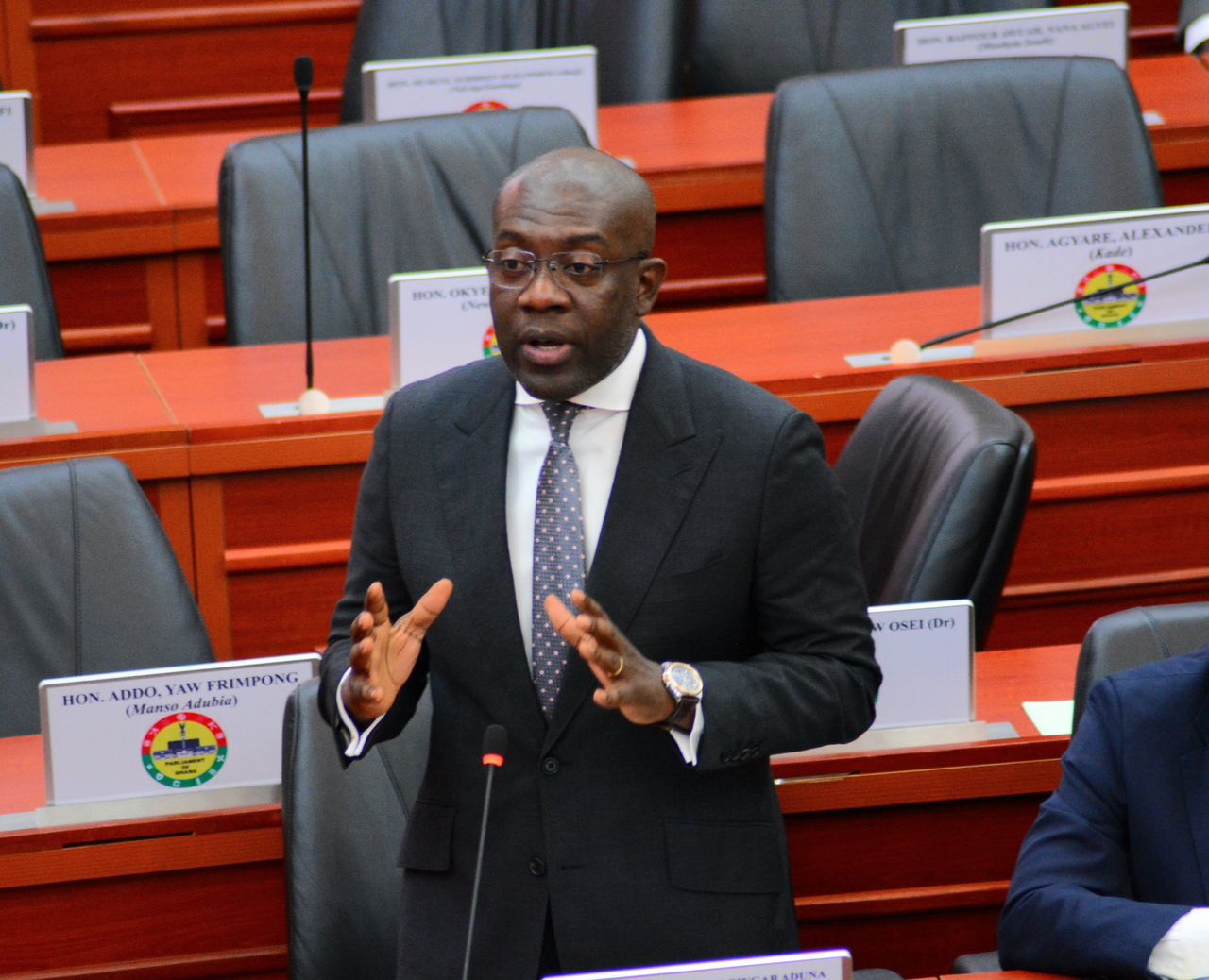
The Supreme Court has thrown out a review application filed by Ofoase Ayirebi MP, Kojo Oppong Nkrumah, who was seeking to overturn an earlier ruling that refused to halt warrants allowing High Court judges to sit during the legal vacation to hear some criminal cases.

A three-member panel chaired by Justice Emmanuel Yonny Kulendi unanimously dismissed the application on Wednesday, September 2, 2026, ruling that it did not meet the strict conditions for the court’s review powers.
The court held that the application failed to prove any exceptional circumstances to justify a review of the decision taken by the single judge, Justice Gabriel Scott Pwamang.
Delivering the ruling, Justice Kulendi said the court had thoroughly examined all processes before it, including affidavits and written arguments from both parties, as well as oral submissions by lawyers.“Our unanimous decision is that the application failed at the threshold on all grounds and as such ought to be dismissed as unmeritorious,” the court stated.
The full reasons for the ruling will be made available at the Registry on September 7, 2026.
Challenge to vacation warrants
The review stemmed from Oppong Nkrumah’s main suit contesting the constitutionality and legality of warrants issued to High Court judges to handle criminal trials during the legal vacation. The warrants cover criminal cases involving former National Signals Bureau boss, Kwabena Adu Boahen, and former National Food Buffer Stock Company CEO, Abdul-Hanan Wahab.
Oppong Nkrumah had asked for an interlocutory injunction to stop the enforcement of the warrants until his substantive constitutional case is determined. Justice Pwamang, sitting as a single justice, dismissed the injunction request, leading the MP to seek a review by the full bench.
What the applicant argued
Led by lawyer Frank Davies, Oppong Nkrumah contended that there were clear errors on the face of the single justice’s ruling that warranted the intervention of the full court. A key argument centred on the difference between civil and criminal cases during the legal vacation. Frank Davies argued that if the single justice held that the vacation rules applied to civil cases but not criminal trials, then there was no need for warrants for criminal trials to proceed during the vacation, and that amounted to an error. He also contended that the single justice went beyond the limits of an interlocutory application by making pronouncements on the merits of the substantive constitutional matter.
Counsel further challenged the test used in deciding whether to grant an interlocutory injunction in a public interest case, insisting the proper test was whether there was a serious legal question to be tried, not whether the applicant had shown a high chance of success.
AG opposes review
The Deputy Attorney-General, Dr Justice Srem-Sai, asked the court to dismiss the application, saying the applicant had not shown any special or exceptional grounds to trigger the Supreme Court’s review jurisdiction. He argued that a review was not an opportunity to re-argue issues already decided by the single justice and could not be used as an appeal against that decision. According to him, none of the eight grounds raised by the applicant met the threshold for review.
After hearing both sides, the Supreme Court dismissed the review application.


