


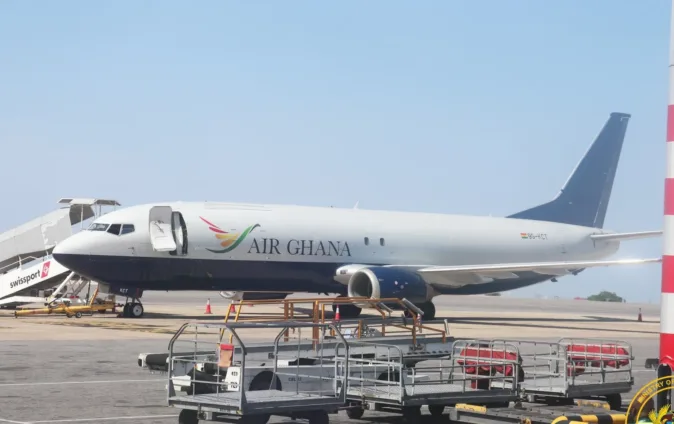
Economist Professor Peter Quartey has attributed Ghana’s high domestic airfares to heavy taxation, aviation fuel prices, expensive credit and the relatively small size of the local aviation market.

His comments come amid growing concerns over the cost of domestic air travel, with passengers frequently comparing fares in Ghana with those in other countries.
Speaking on Joy News’ PM Express Business Edition on Thursday, Prof Quartey said the high cost of doing business is not peculiar to the aviation industry but reflects a broader challenge within the Ghanaian economy.
“It’s not just limited to the airline industry. If you look at our hotels, you’ll see they’re expensive. If you look at other things, rent, etc., we tend to be quite expensive,” he said.
Prof Quartey explained that Ghana’s relatively small domestic aviation market makes it more difficult for airlines to achieve the economies of scale available in larger markets such as Nigeria.
“Our market is not as huge as you would find in Nigeria,” he said, noting that Nigeria’s larger population and higher passenger traffic allow airlines to deploy more aircraft and compete for a bigger customer base.
“In our case, we are paying more because our market is a bit smaller than all these other countries,” he added.
He also pointed to relatively low incomes as a constraint on demand for domestic air travel, with many Ghanaians opting for cheaper alternatives.
“Most people will use road transport, trotro or buses, rather than to fly,” he said.
Prof Quartey also highlighted the experience and scale of some of Africa’s established airlines, including Ethiopian Airlines and Kenya Airways, which he said have operated for decades and are better positioned to offer competitive fares.
However, he identified taxation as one of the major pressures on Ghana’s aviation industry.
“Then you look at the tax environment, and we keep stressing this. So we are taxing, overtaxing the industry,” he said.
According to him, airlines ultimately pass these additional costs on to passengers through higher ticket prices.
“And certainly, as a business person, they will pass it on to the consumer, pass it on to us to pay,” he said.
High borrowing costs are another challenge, particularly for airlines servicing loans used to finance their operations and aircraft.
Prof Quartey also identified aviation fuel as a significant component of operating expenses, estimating that it accounts for about 30 per cent of airlines’ costs.
“Even, let’s talk about aviation fuel. Fuel accounts for about 30% of their cost,” he said.
He argued that addressing high fares would require policies aimed at expanding Ghana’s aviation market and improving the business environment to attract more operators and increase competition.
“What we should be doing going forward is to develop the industry,” he said.
Prof Quartey maintained that investors would naturally enter the sector if the market becomes sufficiently attractive and profitable.
“Once there is the market, once the environment is good, once it’s profitable, every investor, businessman would like to invest in a profitable business,” he said.
“But if the market is not as huge, if we haven’t developed the market and it’s so small, then the very few who ply that route will be charging enough to cover their cost of operations.”


