


Ghana has stepped up its defence against Ebola, with a new 21-day monitoring rule for travellers coming from countries battling the Bundibugyo strain.

The Ministry of Health announced the measure on Tuesday, November 3, as part of stronger checks at the country’s international airports.
Under the new rule, the Ghana Health Service will stay in touch with travellers from affected countries for up to 21 days after arrival. Those travellers must keep their phones reachable and report any symptoms immediately.
“Passengers arriving from countries with ongoing transmission will be monitored for up to 21 days. The Ghana Health Service will contact them for follow-up, and they must keep reachable contact details and report any symptoms immediately to the designated contact,” the Ministry said.
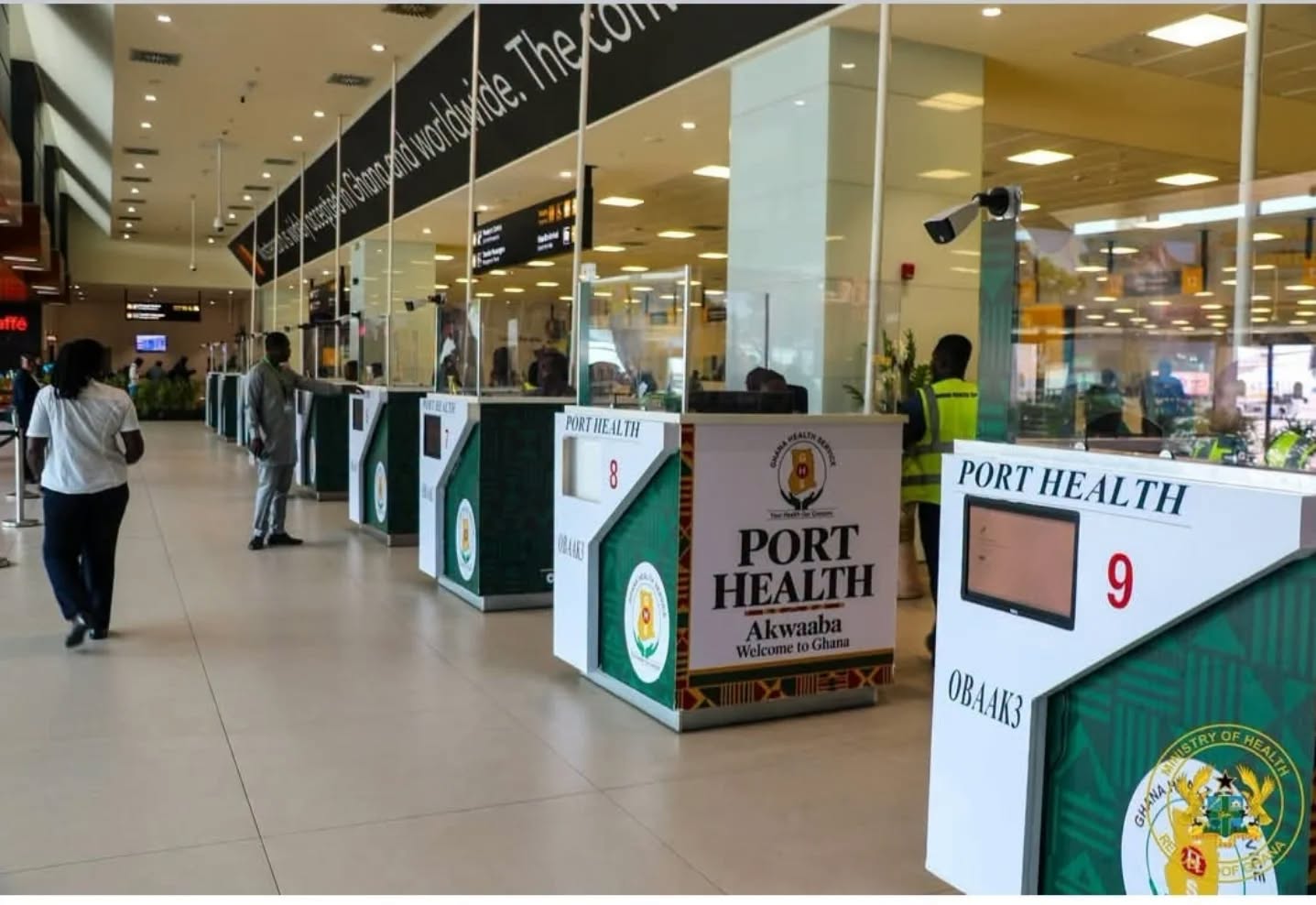
All arrivals will still be screened by Port Health officers. That includes temperature checks and a review of health declaration forms and travel history.
Travellers must declare if they visited or passed through an Ebola-affected country in the last 21 days, or if they had contact with a suspected or confirmed case.
Anyone showing signs such as fever, vomiting, diarrhoea, severe weakness or unexplained bleeding will be sent for further checks, and if needed, kept in temporary isolation for medical care.
The Ministry warned that anyone who gives false information, hides symptoms or refuses screening could face action under Ghanaian law.
Hotels, conference venues and similar facilities have also been told to report guests from affected countries to the nearest district health directorate and keep their contact details.
The Ministry stressed that Ghana has not recorded any confirmed Ebola case. The measures are precautionary.It urged the public to trust only official information from the Ministry and the Ghana Health Service (GHS) and to avoid spreading unverified reports.
The move comes as the outbreak continues across the continent. More than 5,300 people have died, most of them in the Democratic Republic of Congo.More than 10,400 cases have been confirmed since the outbreak was declared in May, with a mortality rate of over 50%, according to the Africa Centres for Disease Control and Prevention (Africa CDC).
The virus has spread beyond the DRC, with confirmed cases in Uganda and Kenya, which recorded its first-ever Ebola infections in October.


