


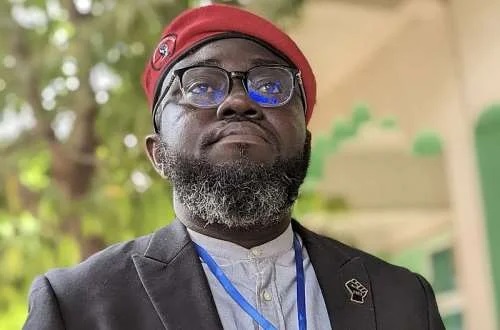
The decision to drop treason charges against social activist Oliver Barker-Vormawor has reignited debates about free speech, selective justice, and the shifting political landscape in Ghana.

Barker-Vormawor, a vocal government critic, was arrested in 2022 for threatening a coup if the E-Levy bill was passed. His detention and subsequent prosecution sparked widespread criticism from human rights organizations, with many arguing that the case was politically motivated to silence dissent.
The two-year trial, which never gained momentum due to a lack of concrete evidence, cost Barker-Vormawor his Cambridge University scholarship and placed him under the threat of life imprisonment or the death penalty.
With a new government in place, the Attorney General has opted to discontinue several high-profile cases initiated by the previous administration, including this one. While some see this as a step towards correcting politically motivated prosecutions, others believe it reflects selective justice rather than a commitment to legal fairness.
Barker-Vormawor has since returned to social media, acknowledging supporters and reinforcing his stance as a critic of government policies. His case remains a landmark moment in Ghana’s political and legal discourse, with implications for how dissent is treated in the country.


