


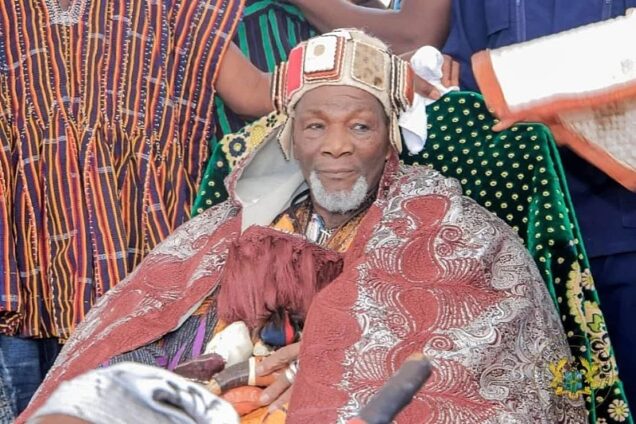
Yaa Naa Mahama Abukari II, the King of Dagbon who ascended the Yendi throne following the resolution of a 16-year chieftaincy dispute, has died.

The 41st Yaa Naa was enskinned on January 18, 2019, after a historic peace process brought an end to years of division between the Abudu and Andani royal gates over the Dagbon kingship.
His ascension marked a turning point for the kingdom, with his reign widely regarded as a period of reconciliation, healing and the restoration of traditional authority in Dagbon.
Born Bukali in Mion, Yaa Naa Mahama Abukari II was the son of Yaa Naa Mahama II, who ruled Dagbon from 1938 until his death on February 6, 1948. His mother, Ayishetu, was a princess from Kulunkpegu, near Chaazaadaanyili in the Northern Region.
Before ascending the Yendi skin, he served as chief of Kpunkpono and later as the chief of Savelugu, one of the three traditional gate skins whose occupants are eligible for the Dagbon kingship.
The Yendi skin had remained vacant since 2002 following violent clashes between the Abudu and Andani royal gates, a conflict that claimed lives, deepened divisions within the kingdom and disrupted traditional governance and cultural activities for more than a decade.
After years of mediation involving the Government of Ghana and eminent traditional leaders, the rival factions agreed to a roadmap for peace aimed at resolving the protracted dispute and restoring stability. Under that agreement, Yaa Naa Mahama Abukari II was selected and enskinned by the kingmakers of Dagbon in 2019.
As overlord of Dagbon, he became a symbol of unity and worked to strengthen reconciliation between the two royal gates while promoting peace and stability across the kingdom.
His reign also witnessed the revival of traditional ceremonies that had been suspended during the years of conflict, helping to restore cultural continuity and reinforce the authority of the Dagbon traditional institution.
The death of Yaa Naa Mahama Abukari II marks the end of a reign that ushered in a new chapter in Dagbon’s history following one of Ghana’s longest-running chieftaincy disputes. His passing is expected to be met with widespread mourning across Dagbon and beyond as many reflect on his role in fostering peace, reconciliation and unity within the kingdom.


