


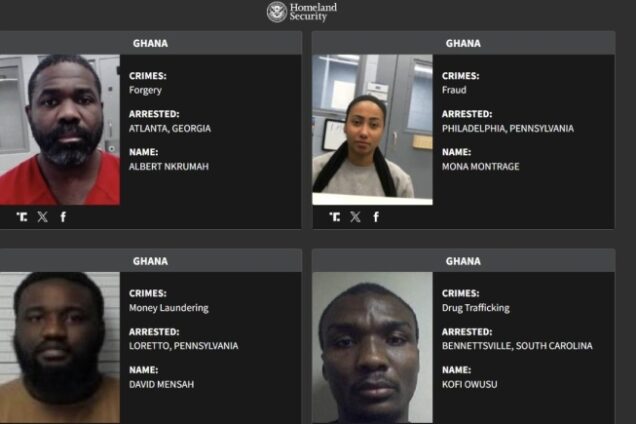
A total of 32 Ghanaian nationals have been named in a United States government database that tracks foreign nationals arrested for alleged criminal offences, with some of those listed potentially facing immigration enforcement actions, including deportation proceedings.

The individuals appear in an online registry maintained by the United States Department of Homeland Security (DHS) through its Immigration and Customs Enforcement (ICE) agency. The database publishes information on non-citizens arrested across the United States for a variety of alleged criminal offences.
According to US authorities, the registry forms part of a transparency initiative aimed at providing public information on immigration enforcement activities. The database includes individuals arrested in connection with offences such as fraud, identity theft, drug-related crimes, human trafficking, money laundering and other criminal and financial violations.
Among the Ghanaian nationals listed is social media personality Mona Montrage, who appears in relation to a fraud-related case in Philadelphia, Pennsylvania.
The publication of the names is part of a broader immigration enforcement campaign by US authorities targeting non-citizens who have been arrested for alleged criminal conduct. DHS stated that approximately 5,000 new arrests were recently added to the database, bringing the total number of individuals listed to more than 35,000.
According to the department, the initiative supports ongoing efforts to enhance public safety and national security by identifying individuals who may be subject to immigration enforcement measures. ICE officers have reportedly been instructed to prioritise non-citizens with criminal records for arrest and possible removal proceedings.
DHS further indicated that nationwide enforcement operations have resulted in the arrest of more than 7,000 gang members and over 1,400 individuals identified as known or suspected terrorists.
The inclusion of the Ghanaian nationals comes amid continuing debate in the United States over immigration enforcement policies and detention practices. While the DHS maintains that its operations focus on individuals accused or convicted of serious offences, immigration advocacy groups and researchers have expressed concerns about the scope of arrests and detentions.
Data published by the research organisation TRAC (Transactional Records Access Clearinghouse), based at Syracuse University, suggests that a substantial proportion of individuals currently held in ICE detention facilities do not have criminal conviction records. According to the organisation, more than 70 per cent of detainees in ICE custody as of early April had no criminal convictions.
The criminal allegations associated with individuals listed in the DHS database vary widely and include offences such as homicide, aggravated assault, sexual offences involving minors, driving under the influence, arson, drug possession and hit-and-run incidents.
The latest update to the registry also includes foreign nationals from several countries, including Honduras, Cuba, Mexico, Guatemala, Vietnam, Liberia, El Salvador, India, Ukraine and Laos.
Immigration experts note that inclusion in the database does not automatically determine the outcome of an individual’s immigration case, as those affected may still pursue legal remedies and challenge enforcement actions through the US immigration system.
The full list of the 32 Ghanaian nationals identified by the Department of Homeland Security is available through the agency’s online criminal arrest database.


