


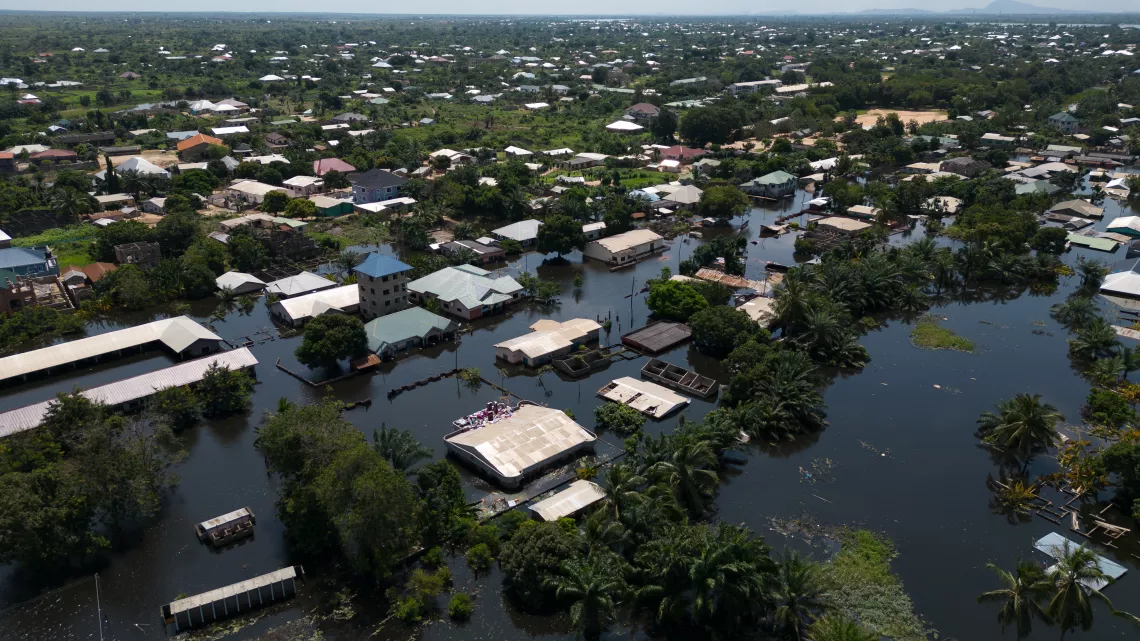
Togbe Komla Sakpiti V, chief of the Bakpa Awadiwoekome stool, is facing mounting pressure from his community as delays in resettlement continue nearly three years after the devastating Akosombo Dam spillage.

The spillage, which occurred between September and October 2023, submerged communities across the Tongu enclave, displacing tens of thousands of residents in North, Central, and South Tongu. Homes, farms, and clinics were destroyed, leaving families dependent on temporary shelters and support from relatives.
In the aftermath, successive governments announced interventions, including committees and funding initiatives. A resettlement panel established under the previous administration was later dissolved following the 2024 political transition, before being revived by the new National Democratic Congress (NDC) government.
Despite these efforts, many affected residents say little progress has been made. Communities such as Degorme and Aveyime still have families living in tents, classroom shelters, and makeshift housing, with limited access to clean water, healthcare, or sustainable livelihoods.
“We don’t know whether to rebuild or keep waiting,” one elder in Awadiwoekome reportedly said during a recent community meeting, reflecting widespread uncertainty.
Official records indicate that a resettlement plan launched in 2024 included a GH¢200 million allocation for the construction of 2,803 housing units across the Tongu area. Authorities initially cited the development of 115 units, later outlining plans for 2,225 homes to be completed in phases.
However, the absence of a clear timeline and a transparent register of beneficiaries has fueled frustration among displaced residents. Many—especially vulnerable groups such as pregnant women, children, and fishermen who lost their livelihoods—remain without adequate support.
For Togbe Sakpiti V, the crisis is deeply personal. His community continues to rely on unsafe water sources, while many sleep under leaking tarpaulins as rainy seasons return. The situation has strained trust in official assurances and divided families between camps and host households.
“The chief is not against government,” a local teacher explained, “but he is asked every week: what do we tell our children?”
With warnings from the Volta River Authority (VRA) about the possibility of future controlled spills, the urgency for action has intensified. Togbe Sakpiti V is now calling for transparency and visible progress—specifically, a public update on the resettlement plan, a verified list of beneficiaries, and active construction work in affected communities like Bakpa Awadiwoekome.
For now, however, life remains uncertain for many residents—marked by nights in temporary shelters, shared living arrangements, and a growing demand for concrete action beyond official statements.


