


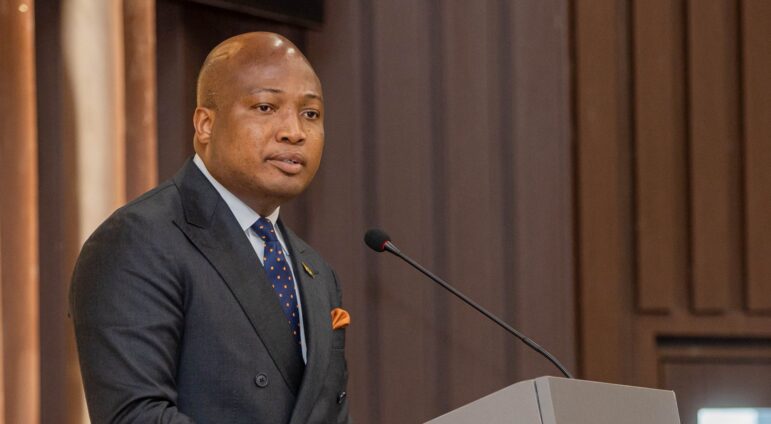
Minister for Foreign Affairs Samuel Okudzeto Ablakwa has called for a more results-oriented approach to diplomacy, arguing that international relations should deliver tangible benefits to citizens within reasonable timeframes rather than being hindered by prolonged bureaucratic processes.

Speaking on the sidelines of the Korea–Africa Foreign Ministers Meeting in Seoul, Mr Ablakwa said diplomacy must be practical, efficient and focused on improving the lives of ordinary people through concrete outcomes.
According to the Foreign Affairs Minister, diplomatic negotiations often take years—and in some cases decades—to conclude, a situation he believes can delay development and cause countries to miss valuable economic opportunities.
“Sometimes diplomatic negotiations can take many years, can take decades, but colleagues will tell you at the ministry that I don’t take excuses and I don’t allow for delays and a laborious rigmarole,” he said.
Mr Ablakwa stressed that diplomacy should ultimately be measured by its ability to generate real benefits in areas such as trade, investment, tourism and economic cooperation.
“It is important that diplomacy delivers, that diplomacy is efficient, that diplomacy impacts positively in real time because sometimes, waiting and delaying and going through needless motions endlessly means you lose out in terms of the quality of life of your people, investment opportunities, tourism opportunities and trade opportunities,” he stated.
He noted that lengthy diplomatic processes often create the perception that diplomacy is disconnected from the everyday concerns of citizens and fails to produce meaningful results.
“And that is why sometimes people think that diplomacy becomes too abstract and it doesn’t deliver meaningful impact,” he added.
The Minister explained that his foreign policy philosophy is centred on ensuring that diplomatic engagements produce measurable outcomes within clearly defined timelines.
“So, I have a whole different concept and philosophy about diplomacy. Diplomacy can work. It can achieve results. It can be impactful,” he said.
Mr Ablakwa further emphasised the importance of setting clear targets and maintaining a sense of urgency in international engagements, arguing that such an approach encourages stronger cooperation from partner countries.
“Once you set clear timelines, you inject efficiency, and you go all out, other countries see that you really have a whole different mindset and they are able to come along with you,” he explained.
Meanwhile, Ghana and South Korea have signed a landmark visa waiver agreement for holders of diplomatic and service passports, marking a significant step in strengthening bilateral relations between the two countries.
The agreement was signed by Mr Ablakwa and Cho Hyun on the sidelines of the ongoing Africa–Korea Foreign Ministers Meeting.
The visa waiver arrangement is expected to facilitate official travel, deepen diplomatic engagement and enhance cooperation between Ghana and South Korea across various sectors, including trade, investment, technology and development cooperation.


