


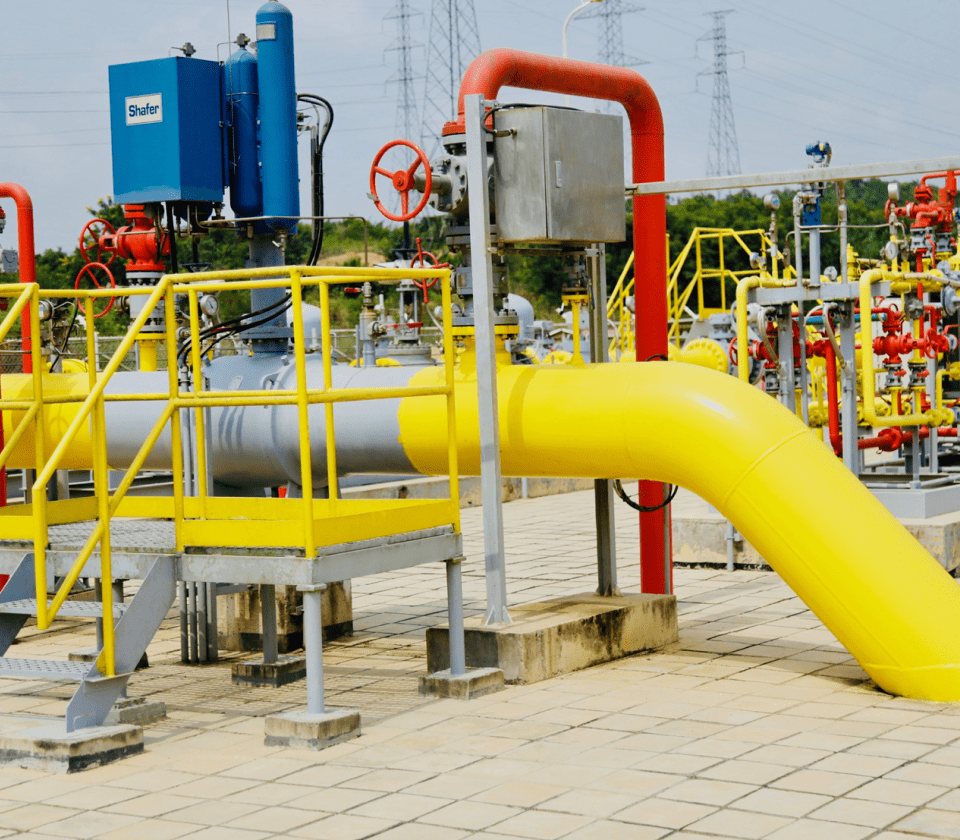
The Africa Sustainable Energy Centre (ASEC) has urged the government to retain full ownership of the proposed second Gas Processing Plant (GPP Train 2) of the Ghana National Gas Company, warning that transferring the facility to a private entity could undermine Ghana’s energy security, increase electricity generation costs and weaken long-term national interests.

In a statement issued on Wednesday, July 8, ASEC said it strongly opposed “any move by the Government of Ghana to hand over the planned second Gas Processing Plant (GPP Train 2) of the Ghana National Gas Company to a private entity.”
According to the Centre, the issue should be viewed as a matter of national energy policy rather than a purely commercial decision.
“Handing over GPP Train 2 to the private sector would not merely be a commercial transaction but a severe, irreversible missed opportunity for the nation,” the statement said.
ASEC argued that when assessed through the lens of economic efficiency, national energy security and long-term strategic planning, the state should maintain full ownership of the facility.
It warned that introducing a private operator into the country’s gas processing system could disrupt the existing framework for supplying fuel to thermal power plants.
The Centre explained that under the current tolling arrangement with Independent Power Producers (IPPs), the government is responsible for supplying fuel for thermal power generation, with Ghana Gas serving as the state-owned entity responsible for processing and distributing domestically produced natural gas.
“Under the current Tolling Agreement with Independent Power Producers (IPPs), the Government of Ghana assumed responsibility for supplying fuel for thermal power generation and established Ghana Gas as the exclusive national vehicle to harness, process, and distribute domestic gas,” the statement noted.
According to ASEC, allowing a private operator to take control of GPP Train 2 would introduce an additional commercial layer into a strategically important segment of the energy sector.
“It creates an unnecessary middleman. A private operator would prioritise maximising profits, increasing power production costs and exposing the state to commercial risks while the government continues to bear the financial and structural liability,” the Centre said.
ASEC further argued that privatisation is generally intended as a remedy for inefficient or financially distressed state-owned enterprises and should not be applied to Ghana Gas.
“Privatisation is a remedial measure for heavily mismanaged, unprofitable and structurally broken public institutions. Ghana Gas does not fit this description,” the statement said.
The Centre pointed to Ghana Gas’ management of the Atuabo Gas Processing Plant as evidence of the company’s technical and operational capability.
According to ASEC, the company has successfully operated the facility, replaced imported light crude oil with locally produced natural gas and generated substantial savings for the country.
“The company has successfully managed the existing Atuabo Gas Processing Plant, substituted imported light crude oil with indigenous natural gas, and saved the nation billions of dollars,” the statement said.
While opposing private ownership of GPP Train 2, ASEC stressed that it supports private sector participation in other areas of the energy sector.
It said reforms should instead focus on the commercial operations of the Electricity Company of Ghana (ECG), which it described as facing persistent financial challenges.
“Private sector participation should instead focus on ECG,” the Centre stated, adding that it has consistently advocated greater private involvement in ECG’s commercial operations because of the utility’s chronic financial losses.
ASEC also described GPP Train 2 as a strategic national asset, arguing that natural gas remains critical to electricity generation, industrialisation and Ghana’s broader economic development.
“Natural gas is the backbone of Ghana’s industrialisation drive. Retaining 100% ownership of GPP Train 2 ensures that gas processing remains aligned with national development timelines,” the statement said.
The Centre maintained that public ownership would enable the government to align gas processing with national development priorities, while warning that private operators could place commercial interests above national needs during periods of economic uncertainty.
“During periods of economic distress or currency fluctuations, a private operator could halt operations, demand tariff adjustments, or place commercial interests above national priorities,” the statement cautioned.
ASEC concluded that the debate over GPP Train 2 extends beyond commercial considerations, arguing that because natural gas is central to Ghana’s electricity supply and energy security, the planned facility should remain entirely under state ownership.


