


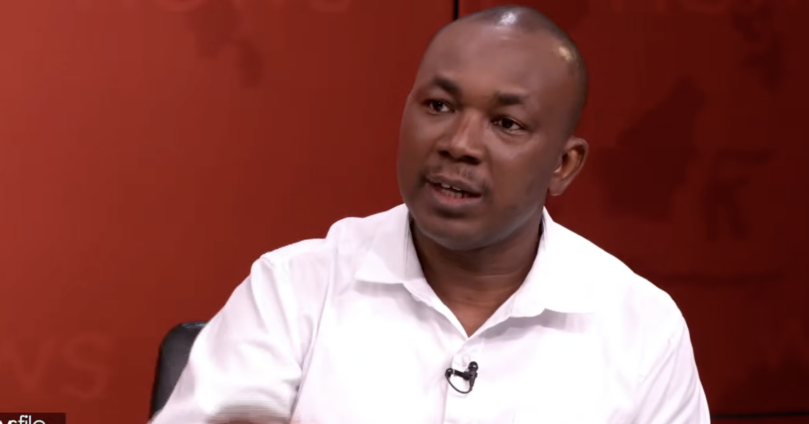
Economist Professor Godfred Bokpin has challenged the growing narrative that Ghana’s recent improvement in its debt position is primarily the result of the performance of the Ghana Gold Board (GoldBod).

According to him, the financial relief currently being enjoyed by the country was made possible largely by the sacrifices of domestic bondholders, Eurobond investors, pensioners and external creditors who accepted significant losses during Ghana’s debt restructuring.
Speaking on the issue, Professor Bokpin said the controversial domestic debt exchange programme played a critical role in creating the fiscal room that has allowed government to reduce the country’s debt-to-GDP ratio and lower debt-servicing costs.
He argued that the creditors who agreed to restructuring terms provided the country with the financial “breathing space” needed to stabilise its finances.
“The unpopular domestic debt exchange has played a key role. Remember that those who gave Ghana fresh air were actually not GoldBod,” he said.
Professor Bokpin said the contribution of creditors should not be overlooked when assessing Ghana’s current economic position, particularly because many of them agreed to restructuring at a time when the country was facing severe financial pressures.
He specifically highlighted domestic bondholders and Eurobond holders, who he said made substantial sacrifices when Ghana needed financial support.
He also drew attention to pensioners who were affected by the domestic debt restructuring, arguing that their contribution to the country’s economic recovery deserves greater recognition.
“Those who gave Ghana sweat equity, who gave Ghana fresh air to breathe, and I think we need to recognise them today, including pensioners and all of them, who endured a haircut,” he said.
$13.5bn financing gap
Professor Bokpin further recalled the scale of Ghana’s financing challenges when the IMF-supported programme was being negotiated.
He said the original programme identified a balance-of-payments financing gap of approximately US$13.5 billion, at a period when GoldBod’s domestic gold purchasing operations were still relatively limited.
He therefore cautioned against attributing the country’s current fiscal improvements predominantly to GoldBod’s activities.
Instead, he said, the contribution of domestic bondholders, Eurobond investors, pensioners and bilateral creditors should form part of the assessment of how Ghana created the fiscal space it currently has.
Professor Bokpin welcomed the significant decline in the country’s debt-to-GDP ratio and debt-servicing burden but warned that the improvement would have little lasting value if government failed to manage the fiscal space responsibly.
‘We have been here before’
The economist said Ghana should learn from its experience following the Highly Indebted Poor Countries (HIPC) programme and the Multilateral Debt Relief Initiative (MDRI).
He noted that those interventions had previously resulted in a dramatic improvement in Ghana’s debt position, with the debt-to-GDP ratio falling below 30 per cent.
However, the fiscal gains were eventually exhausted, forcing the country to return to the International Monetary Fund in 2009.
Professor Bokpin therefore urged policymakers to avoid repeating the same cycle by using the current fiscal relief to strengthen the productive capacity of the economy rather than finance inefficient expenditure or excessive borrowing.
“It’s good news we are celebrating this fiscal space. Let’s put in place the right structures, spend efficiently, borrow prudently, and invest it in enhancing the cash flow-generating capacity of the economy,” he said.
He warned that without stronger fiscal discipline and productive investment, Ghana could squander the gains achieved through the difficult debt restructuring process.
“Otherwise, we have been there before,” he cautioned.


