


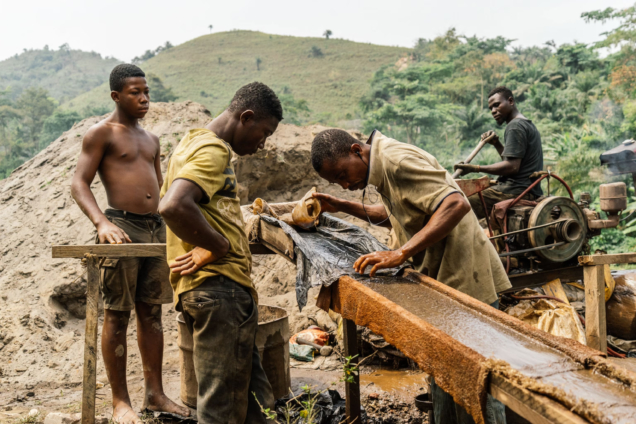
Award-winning JoyNews environmental journalist Erastus Asare Donkor has alleged that some illegal miners are using the government’s cooperative mining programme as a cover to continue environmentally destructive mining activities in several parts of the country.

Speaking on Joy FM’s Super Morning Show on Thursday, August 6, Mr Asare Donkor claimed the initiative, which was introduced to promote responsible small-scale mining, is being abused by individuals engaged in illegal mining operations.
His remarks coincided with the first anniversary of the military helicopter crash that claimed the lives of eight state officials who were travelling on an assignment linked to the fight against illegal mining.
According to Mr Asare Donkor, communities including Berekum, Dawma and areas along the Bekwai–Esiwa road have witnessed a resurgence of mining activities, despite previous enforcement operations.
He also alleged that similar activities are taking place in several farming communities across the Eastern, Western and Ashanti regions.
“When you go to Berekum, the whole place has been taken over. Go to Dawma; recently NAIMOS was there, and I thought they had contained the situation, but the miners have returned,” he said.
Mr Asare Donkor argued that the alleged abuse of the cooperative mining programme undermines the objective for which it was established.
According to him, the scheme was intended to encourage sustainable and regulated mining practices following years of environmental destruction caused by illegal mining.
He expressed disappointment that some operators were allegedly exploiting the programme to continue activities that damage communities and natural resources.
“The very reason the cooperative mining scheme was introduced was to promote sustainable mining, but some people are now using it as a cover to destroy communities,” he said.
Citing the Bekwai Municipality as an example, the journalist alleged that some miners are operating dangerously close to major roads, raising concerns about public safety and environmental protection.
He further claimed that enforcement operations carried out by the National Anti-Illegal Mining Operations Secretariat (NAIMOS) have produced only short-lived results.
According to him, although security personnel previously destroyed some mining equipment during an operation in the area, illegal miners resumed their activities within days.
Mr Asare Donkor also alleged that some traditional authorities in affected communities are supporting illegal mining operations within their jurisdictions.
He called for stricter supervision of the cooperative mining programme to prevent it from being exploited by individuals engaged in illegal mining and urged authorities to strengthen enforcement efforts to protect communities and the environment.
The government introduced the cooperative mining model as part of broader efforts to formalise Ghana’s small-scale mining sector, improve regulatory oversight and promote environmentally sustainable mining practices. However, concerns continue to be raised by environmental advocates and other stakeholders over alleged abuses of the initiative by illegal mining operators.


