


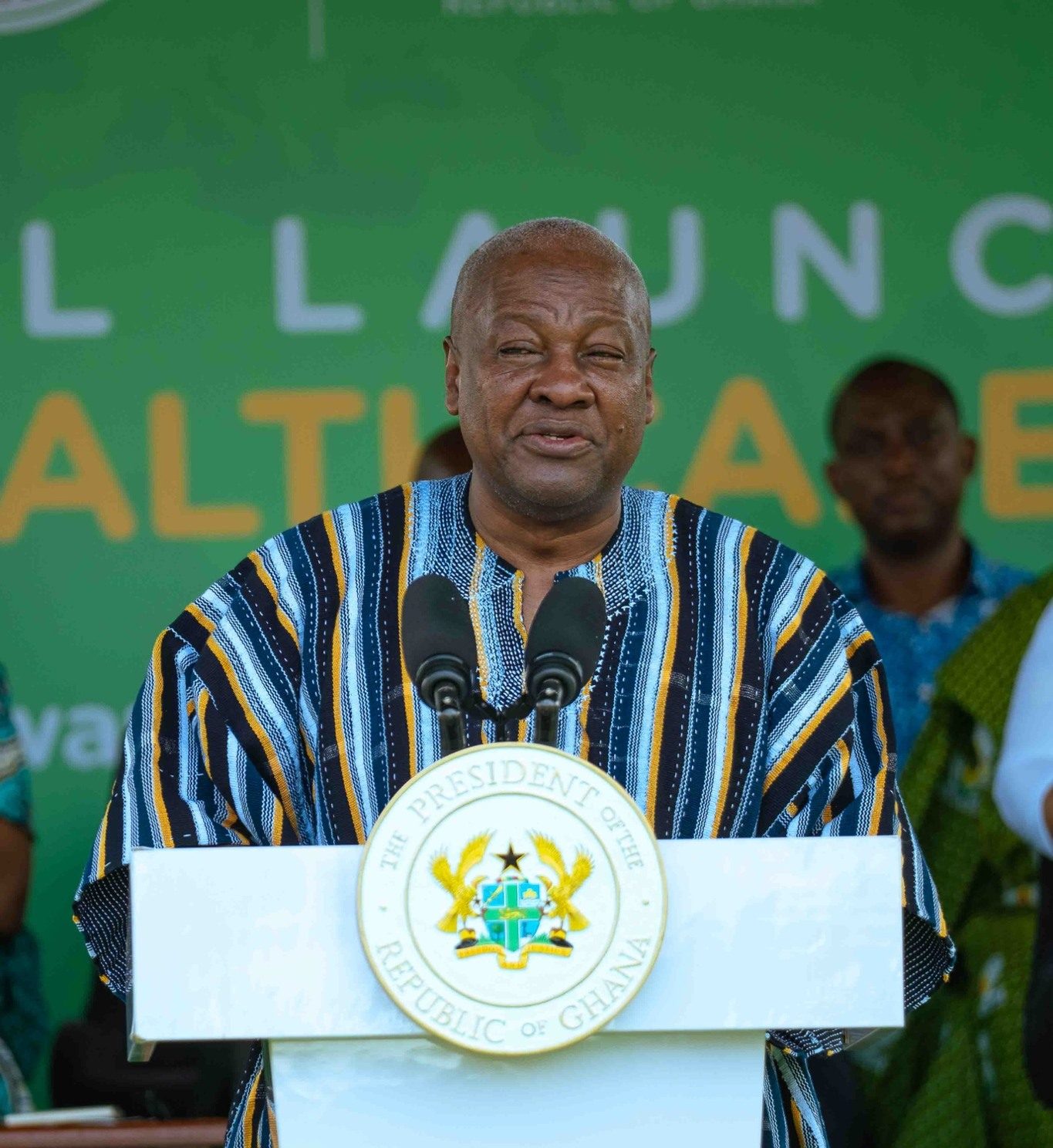
President John Dramani Mahama has explained that tricycles rolled out under the free primary healthcare programme are meant to help health staff members with outreach work, not function as ambulances.

Speaking at a sod-cutting event on Saturday, April 18, the President tackled public confusion around the project, emphasising that the tricycles were built to improve service delivery at the local level.
“There are more than 6,000 CHPS compounds in Ghana, among the equipment we presented were motorcycles and tricycles. Let me be clear, those tricycles are not ambulances,” he stated.
He said the tricycles will allow health workers and volunteers to move between villages to run screenings and provide vital health services, especially where transport is difficult.
He noted that the vehicles have storage units to keep vaccines safe, enabling staff to preserve cold-chain standards while doing immunisation and community programmes.“And so at the back of the tricycle they have a compartment where they can keep vaccines… to keep the vaccines cool,” he added.
President Dramani Mahama further stated that allocation of motorcycles and tricycles is based on regional conditions, with motorcycles sent to places where health workers can ride them, mainly in northern Ghana.
“So in the southern parts, where the health workers cannot ride motorcycles, they’ll be given tricycles to go from village to village to do their work,” he added. Re-emphasizing his point, the President asked the public to avoid wrong interpretations, noting the vehicles are solely for preventive health delivery, including checks for illnesses like hypertension and diabetes.
“They are vehicles for the health workers… to go to the village, deliver vaccinations and also do health screening,” he said.
The explanation comes amid ongoing online debate over the role of the tricycles under the recently unveiled free primary healthcare plan.The programme, launched earlier this month, is set to start in 150 districts in its first phase, as part of moves to boost preventive healthcare and widen access to universal health coverage.


