


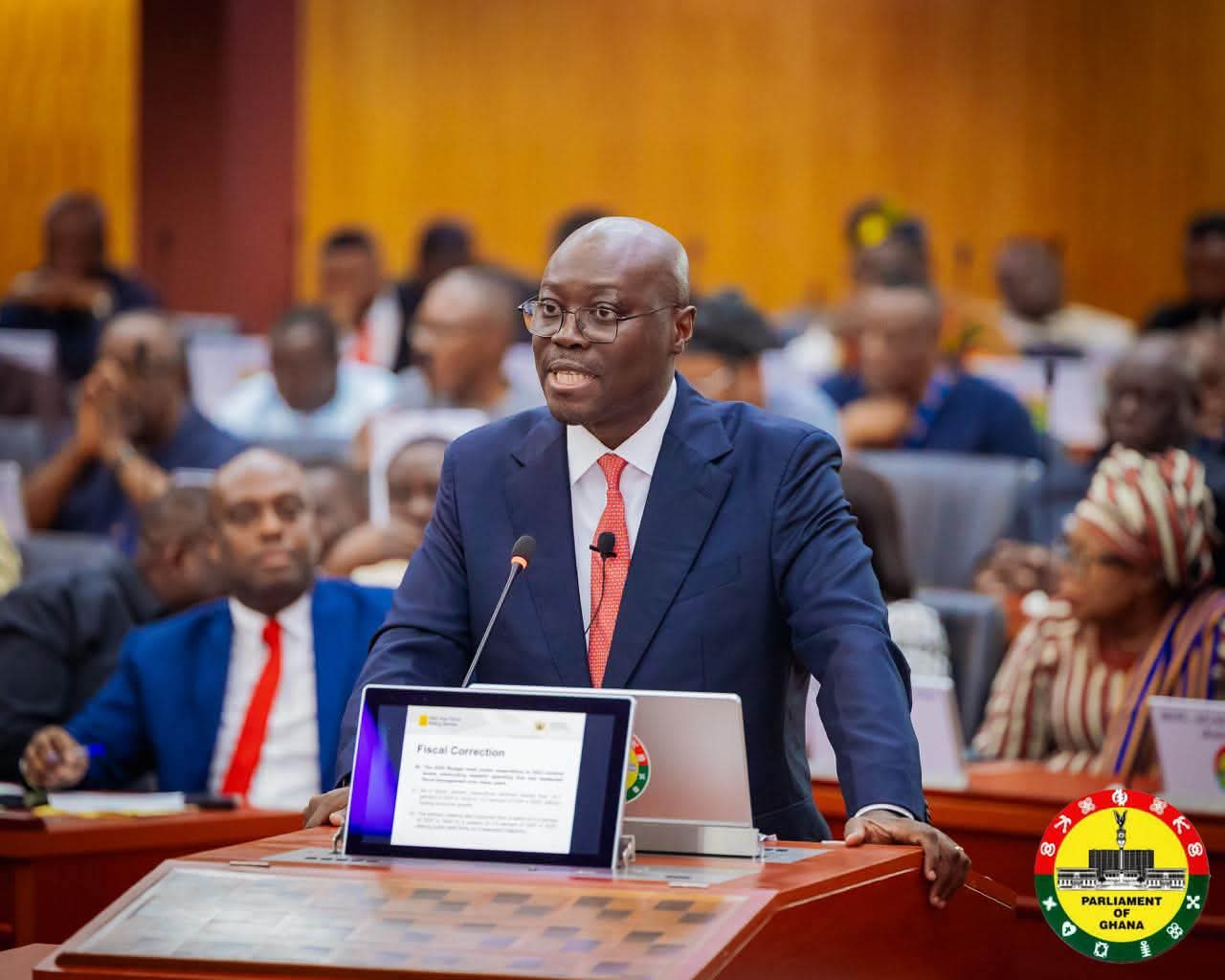
Ghana has achieved a debt-to-GDP ratio of 45 per cent years ahead of schedule, marking a significant turnaround in the country’s public debt position, Finance Minister Dr Cassiel Ato Forson has announced.

Presenting the 2026 Mid-Year Fiscal Policy Review to Parliament on Thursday, July 23, Dr Forson said the country’s debt-to-GDP ratio had fallen from 61.8 per cent at the end of 2024 to 45 per cent as of June 2026.
“Mr Speaker, Ghana has therefore already achieved its statutory debt target of 45 per cent of GDP, years ahead of both the IMF programme timetable and the target date established under the Public Financial Management Act,” he said.
The Finance Minister also announced an improvement in Ghana’s debt sustainability assessment, saying the country had moved from being classified as having unsustainable debt to “Sustainable with Room to Absorb Shocks.”
According to Dr Forson, the turnaround followed a combination of expenditure controls, fiscal consolidation and structural reforms aimed at preventing the accumulation of unsustainable liabilities.
Primary expenditure declined from 18.7 per cent of GDP in 2024 to 13.2 per cent in 2025, while the primary balance improved from a deficit of 2.9 per cent to a surplus of 2.5 per cent of GDP.
“This sent an unmistakable signal to Ghanaians, investors and our development partners that fiscal discipline is the new order,” he said.
The government has also amended the Public Financial Management Act to introduce a binding fiscal rule requiring a minimum annual primary surplus of 1.5 per cent of GDP and a debt-to-GDP ceiling of 45 per cent by 2034.
Other measures include the establishment of a Value for Money Office and a Fiscal Council, as well as the extension of the Commitment Authorisation regime to State-Owned Enterprises to control the accumulation of liabilities.
Dr Forson also disclosed that the Sinking Fund had accumulated GH¢15.6 billion as of July 22, with the government targeting GH¢30 billion by the end of 2026.
The amount is expected to help the government meet GH¢30 billion in Domestic Debt Exchange Programme obligations falling due in February 2027.
“Brick by brick, cedi by cedi, we are building the wall that will meet the wave so that when 2027 and 2028 come, Ghana will not scramble. Ghana will simply pay,” he declared.
The Finance Minister said the country’s improved fiscal position was also being reflected in the financial markets, with Ghana’s Eurobond yields falling by about 300 basis points.
He added that lower borrowing costs had saved the country GH¢4.2 billion within six months, while Ghana had successfully issued a seven-year cedi-denominated bond for the first time since the 2022 debt default.


