


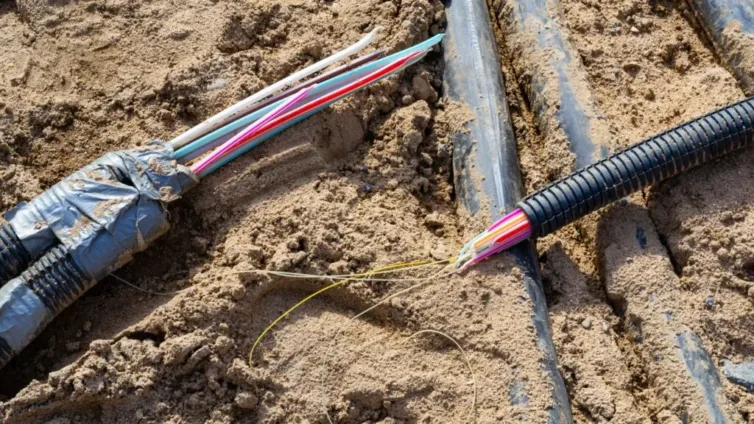
Ghana’s telecommunications sector is facing mounting pressure as infrastructure damage and vandalism continue to disrupt network stability across the country. The Ghana Chamber of Telecommunications says fibre optic cable cuts have risen dramatically over the past fifteen years, placing enormous financial strain on service providers and threatening the country’s digital growth.

Speaking during the launch of the Chamber’s 15th anniversary celebrations, Chief Executive Officer Sylvia Owusu-Ankomah disclosed that annual fibre cuts have surged from roughly 400 incidents in the early stages of telecom expansion to nearly 8,000 cases each year.
Industry leaders say the situation has evolved into a major operational crisis, driven largely by road construction activities, illegal mining operations, and uncontrolled excavation works that repeatedly damage underground fibre infrastructure.
According to the Chamber, Ghana’s rapid digital transformation has unintentionally increased the sector’s vulnerability. Internet penetration, which stood at about 4% fifteen years ago, has now exceeded 70%, resulting in the nationwide expansion of fibre networks that are increasingly exposed to damage.
Mrs Owusu-Ankomah explained that telecom operators are now diverting substantial investment away from network expansion projects in order to maintain existing infrastructure.
She noted that resources that could have funded improved connectivity, expanded rural access, and next-generation technologies such as 5G are instead being consumed by constant repair work aimed at maintaining service quality.
To address the problem, the Chamber is intensifying calls for the implementation of a nationwide “Dig Once” policy. The proposed framework would require road construction projects to include protected underground duct systems that can accommodate fibre installations from multiple telecom operators without repeated excavation.
Industry executives argue that such a system would significantly reduce infrastructure damage, lower maintenance costs, and improve long-term network reliability.
The Chamber believes the telecommunications sector has reached a stage where stronger regulatory protection is no longer optional. Officials say years of discussion must now translate into enforceable policy measures capable of safeguarding critical digital infrastructure.
Mrs Owusu-Ankomah stressed that the industry’s maturity should be matched by policies designed to protect national connectivity and ensure uninterrupted service delivery for consumers.
There are indications that the proposed “Dig Once” policy is currently under consideration at the Cabinet level, raising hopes within the industry that government action may be imminent.
The Chamber maintains that without urgent intervention, recurring fibre cuts will continue to undermine service reliability, disrupt economic activity, and slow Ghana’s ambitions of becoming a fully connected digital economy.


