


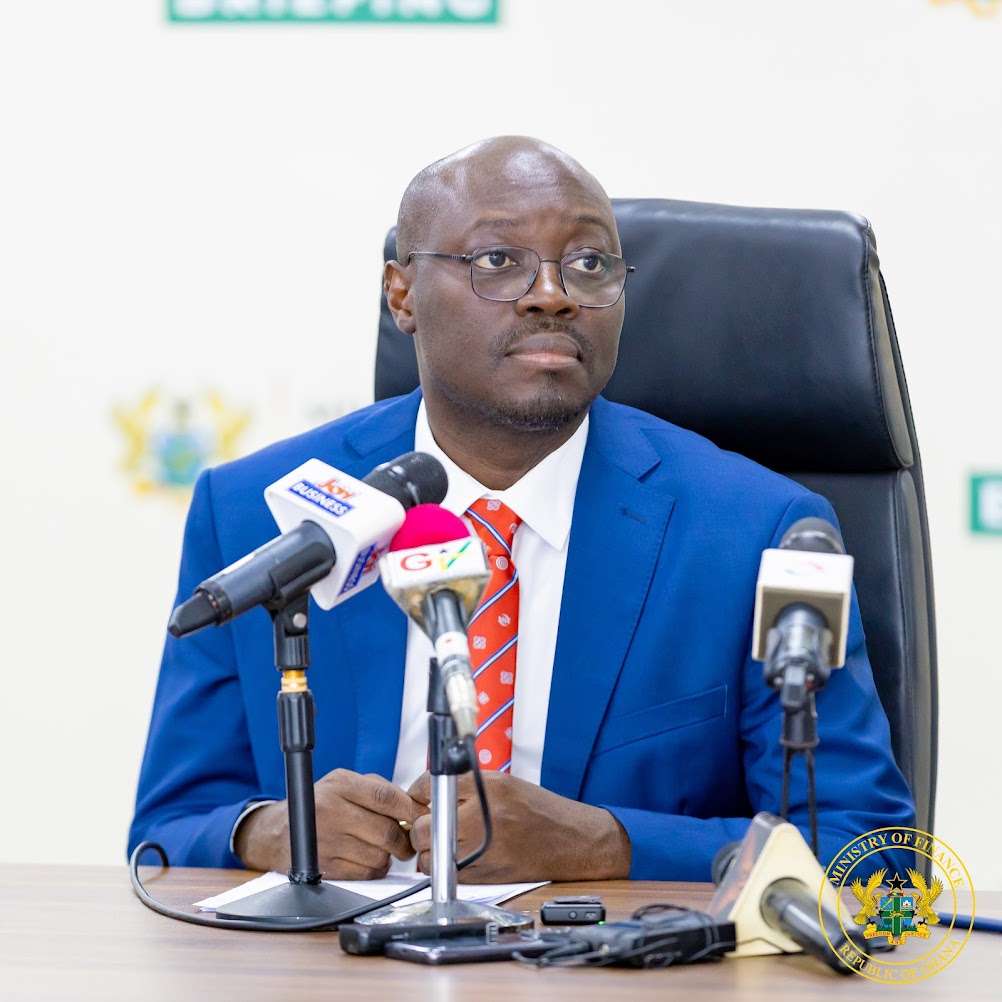
The Government has reaffirmed its commitment to fully recapitalising the Bank of Ghana by 2032 following Parliament’s approval of amendments to the Central Bank’s legislation aimed at securing its long-term financial stability.

Speaking at a press briefing on Friday, May 15, Finance Minister Cassiel Ato Forson announced that the amended law would provide the legal framework necessary to support the recapitalisation process as the government works with the central bank to address its negative equity position.
The Bank of Ghana recorded an operating loss of GH₵15.63 billion and an Other Comprehensive Income (OCI) loss of GH₵19.32 billion in 2025. Its negative equity also deepened significantly, rising from GH₵61.32 billion at the beginning of the year to GH₵96.28 billion by year-end.
Dr Forson explained that the recapitalisation exercise would be implemented gradually over the next several years as part of efforts to restore the Bank’s financial strength and support its mandate of maintaining price stability.
“The government is committed to fully recapitalising the central bank. It is a gradual process from now to 2032. In the new amendment, we have also introduced automatic recapitalisation,” he stated.
According to the Finance Minister, the amended legislation ensures that whenever the central bank’s capital falls below the required threshold, the government will automatically intervene to restore it.
He stressed that the government remained fully committed to returning the Bank of Ghana to financial stability and viewed the amended law as a credible roadmap for resolving its capital challenges.
Meanwhile, IMF Chief Mission for Ghana, Ruben Atoyan, described the central bank’s financial difficulties as an “inevitable” consequence of broader financial sector conditions but expressed confidence in the Bank’s recovery strategy.

Mr Atoyan noted that the Bank of Ghana faced significant financial pressure in 2025 due to high open market operation costs, elevated interest rates, and aggressive liquidity management measures under a tight monetary policy framework. He added that exchange rate fluctuations also worsened the Bank’s financial position during the period.
Despite the challenges, the IMF official said the 2032 recapitalisation target remained achievable and had already been incorporated into the Fund’s debt sustainability analysis.
He also disclosed that the IMF supported the Bank of Ghana’s decision to sell part of its gold holdings in late 2025 to strengthen its balance sheet.
Mr Atoyan further revealed that discussions had been held with Ghanaian authorities on reducing risks associated with the domestic bond programme and limiting potential losses, with additional details expected in the IMF staff report.
He expressed confidence in Ghana’s economic recovery path, stating that ongoing fiscal reforms, debt sustainability measures, and the Bank of Ghana recapitalisation framework provide a strong foundation for long-term economic stability.
The IMF official also urged Ghana to remain committed to reforms and continue building a resilient economy capable of withstanding future economic shocks without the need for another international bailout programme.


