


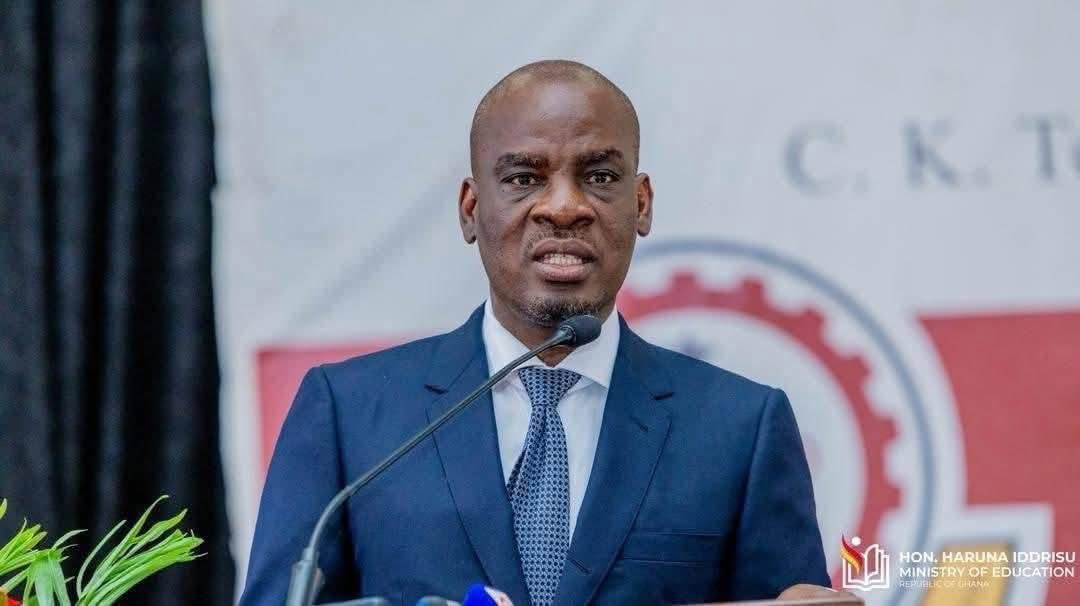
Minister of Education Haruna Iddrisu has announced that the government is aggressively decentralising and expanding medical education across the country as part of efforts to improve Ghana’s doctor-to-patient ratio and strengthen healthcare delivery.

Speaking at the commissioning of a new hostel facility at Wisconsin International University College in Feyiase in the Ashanti Region, the Minister said expanding medical training beyond the country’s traditional educational centres is essential to addressing the shortage of doctors.
According to him, the decentralisation initiative will help produce more medical professionals and ensure their deployment to underserved communities.
“This will help us get more doctors across the country,” he said.
“Currently, we have more nurses all over the country, and we need to balance that with an increased number of doctors.”
Government Targets Expansion of Medical Training
Mr. Iddrisu said the government’s approach to medical education would mirror reforms being implemented in legal education to broaden access to professional training.
“Many of you know that the NDC government is very determined to demystify legal education. That is why we have a new law on legal education.
“So very soon, we will shift it to the area of medicine. In times past, there were very few people studying law. Now the numbers are multiplying, and it should be the same for medicine,” he stated.
He explained that by removing barriers to entry and expanding training opportunities, government expects to significantly increase medical school enrolment, similar to the growth witnessed in legal education.
New Hostel to Support Health Sciences Expansion
The newly commissioned hostel at Wisconsin International University College is expected to accommodate more students pursuing medicine and other health-related programmes as the institution expands its medical and allied health training.
Stakeholders, including traditional leaders and education experts who attended the event, welcomed the government’s plans, saying greater access to medical education would ease pressure on the country’s major teaching hospitals and help retain more healthcare professionals in the regions.
According to the government, the expansion of medical education forms part of its broader human capital development agenda aimed at strengthening healthcare delivery and improving access to quality medical services nationwide.


