


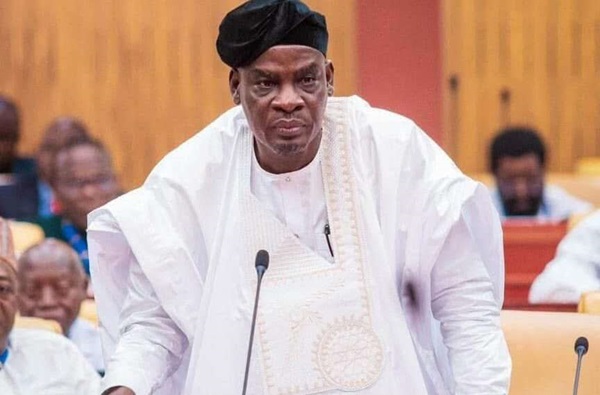
The Minister for Education, Haruna Iddrisu, has outlined the rationale behind the government’s revised Basic Education Certificate Examination (BECE) placement policy, linking the change to persistent inequalities, infrastructure gaps, and quality concerns within Ghana’s secondary education system.

Speaking at a press conference and later on Joy FM’s Super Morning Show on April 2, the minister said the reform is part of efforts to improve the Computerised School Selection and Placement System and ensure a more transparent and efficient placement process.
Under the new policy, students will select their preferred Senior High Schools only after their BECE results are released. Previously, candidates had to make their choices before sitting the exam, often without a clear idea of their expected performance.
According to Mr Iddrisu, this led to frequent mismatches between students’ academic results and their school selections.
“For the time being, we need to overhaul the comprehensive school placement system to make it fair, transparent, and predictable,” he said, noting that improved data algorithms will also support the reforms.
Addressing Systemic Pressures
The minister attributed the policy shift to broader structural challenges, including rising demand for secondary education driven by population growth.
“The country has grappled with expanding access to secondary education, but this has not been matched with adequate infrastructure and quality assurance,” he explained.
He highlighted a significant imbalance in school demand, noting that while about 70,000 spaces exist in Category A schools, they attract roughly 285,000 applications. In contrast, Category C schools have nearly 500,000 vacancies but far fewer applicants due to concerns about quality.
Upgrading School Infrastructure
To address these disparities, Mr Iddrisu said government has secured support from the World Bank to upgrade lower-tier schools.
The plan includes converting some Category C schools into Category B, and Category B into Category A institutions, while also addressing regional inequalities.
He pointed out that regions such as the Oti Region, Savannah Region, and North East Region currently lack Category A schools, a situation government aims to correct.
Free SHS and Quality Concerns
While acknowledging the expansion in access brought by the Free Senior High School policy, the minister admitted that quality has not kept pace.
“The increase of Free SHS, transformational as it was, was not backed by quality assurance,” he said, citing poorly equipped laboratories in many schools.
Tackling Premature BECE Participation
Mr Iddrisu also raised concerns about students sitting the BECE prematurely, sometimes before reaching Junior High School Form Three.
He stressed that this practice violates guidelines set by the Ghana Education Service and the West African Examinations Council, and contributes to poor performance outcomes.
Stricter enforcement of these regulations, he said, will be necessary.
Role of Alumni and Governance
The minister called for stronger involvement of alumni associations in supporting schools, particularly in areas of infrastructure and governance, noting their potential role in promoting fairness across the system.
Implementation and Funding
On implementation, Mr Iddrisu indicated that the reform programme is expected to begin soon, with a July timeline in view.
He revealed that the government is seeking approval for a $300 million facility from the World Bank to support the initiative, alongside ongoing inventory and procurement processes.
Recruitment Drive Across the Sector
As part of broader reforms, the minister announced that approval has been granted to recruit 9,600 personnel across the education sector.
This includes about 7,000 teachers, as well as 1,200 to 1,500 academic staff for higher education institutions. Additional recruitment will cover non-teaching roles such as drivers, matrons, accountants, and security personnel.
He noted that many schools currently lack essential support staff and adequate welfare systems, including proper food oversight and campus security.
Overall, Mr Iddrisu said the reforms are aimed at creating a more equitable, efficient, and high-quality education system that aligns access with performance while addressing longstanding structural challenges.


