


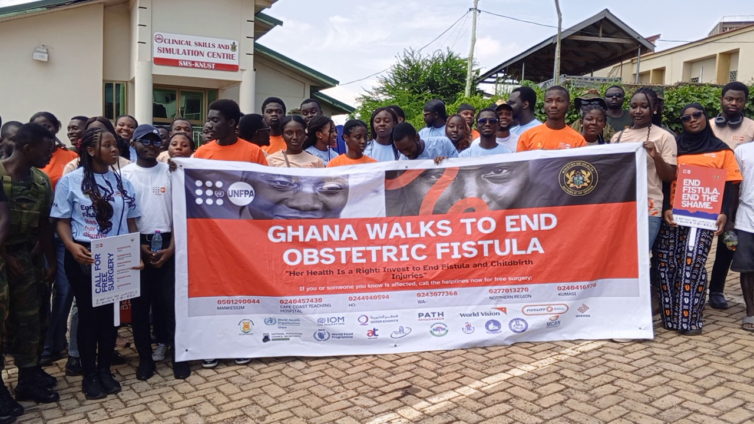
Health experts are calling for urgent national action to address obstetric fistula in Ghana, revealing that more than 7,000 women are currently living with the condition across the country.

The concern was highlighted during an awareness campaign held in Kumasi to mark World Obstetric Fistula Day under the theme: “Her Health Is a Right: Invest to End Fistula and Childbirth Injuries.”
Medical professionals explained that obstetric fistula is primarily caused by prolonged and obstructed labour, particularly in situations where women are unable to access timely emergency healthcare services.
An obstetric specialist with the United Nations Population Fund (UNFPA), Adzi Kofi Gudugbe, explained that the condition occurs when prolonged pressure during childbirth damages tissues between the bladder and rectum, resulting in uncontrollable leakage of urine or stool.
“When this happens, the baby’s head is pressed firmly against either the bladder or the rectum, and because of the prolonged pressure, the tissue in that area can die,” he explained.
According to Dr Gudugbe, the condition often leaves affected women isolated, stigmatised, and emotionally traumatised.
“The stench is so strong that the woman withdraws from society. Even their partners sometimes leave them, and some communities wrongly believe they are witches,” he stated.
Dr Gudugbe disclosed that Ghana records nearly 800 new obstetric fistula cases annually, while recent studies estimate that approximately 7,130 women were living with the condition in 2025.
He stressed that improving access to skilled delivery services and emergency obstetric care remains essential to eliminating the condition nationwide.
“To achieve the target of eliminating obstetric fistula in Ghana, we need to repair close to 2,500 cases every year for the next four years,” he said.
As part of efforts to address the challenge, health authorities and partner organisations are organising free fistula repair surgeries at several centres across the country from now until mid-June 2026.
Dr Gudugbe also appealed to the private sector, corporate organisations, and philanthropists to support the national campaign through funding and partnerships aimed at expanding treatment and awareness efforts.


