


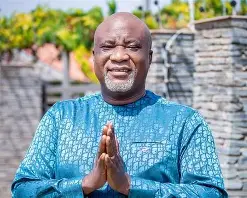
The Director of Field Operations for the United Party, Hopeson Adorye, has called for a one-year suspension of small-scale mining activities in Ghana to allow degraded lands and polluted water bodies to recover from the effects of illegal mining, popularly known as galamsey.

Speaking on JoyNews’ AM Show on Tuesday, May 19, Mr Adorye argued that stronger and more decisive measures are needed to address the environmental destruction caused by illegal mining, particularly within the small-scale mining sector.
According to him, illegal mining activities continue to devastate forests, farmlands and rivers across the country, posing a serious threat to Ghana’s environmental sustainability.
His comments come in the wake of a violent incident in the Bibiani-Anhwiaso-Bekwai area, where one person reportedly died and six others sustained injuries, further intensifying public concern over the social and security implications of illegal mining activities.
Mr Adorye recounted a recent journey to Sunyani, during which he said a pilot gave him the opportunity to observe the scale of environmental destruction caused by galamsey from the air.
According to him, the aerial assessment revealed widespread damage to farmlands and major water bodies.
He said the pilot explained how aerial surveillance and coordinate mapping could significantly improve efforts to identify and clamp down on illegal mining operations, highlighting the need for greater technological support in anti-galamsey operations.
While acknowledging the economic pressures driving many people into mining, Mr Adorye argued that financial gain should not come at the expense of the country’s natural resources.
“Everybody needs money, but not all money should be pursued,” he stated.
He further emphasised that Ghana’s mineral resources belong to the state under the law and therefore require stronger government oversight and regulation.
Mr Adorye proposed that all small-scale mining activities be suspended for one year while large-scale legal mining companies continue operating under strict supervision.
“I think we should ban mining for one full year. If we see anyone mining during that period, they are on their own. That will allow us to reclaim our lands and let our water bodies recover,” he suggested.
According to him, all small-scale miners — including those currently holding licences — should be required to reapply after the moratorium under stricter regulatory conditions.
He argued that such a process would allow authorities to reassess concession areas and prevent mining activities near rivers, forests and environmentally sensitive zones.
Mr Adorye also advocated greater deployment of helicopters belonging to the Ghana Armed Forces for continuous aerial monitoring of mining areas.
He suggested that military air assets should play a more active operational role in combating illegal mining rather than being used primarily for official transportation.
Additionally, he linked illegal mining to rising insecurity in some communities and argued that better profiling and monitoring of individuals involved in galamsey could help reduce violence associated with the sector.
According to him, stronger accountability mechanisms at the community level could also assist in curbing the growing menace.


