


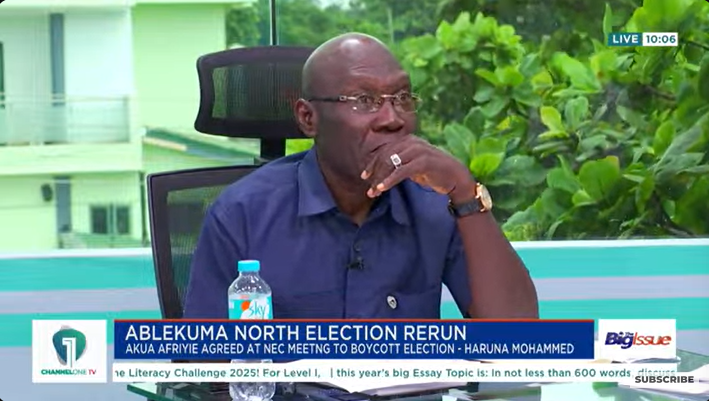
Former Tamale Central MP Inusah Fuseini has opposed the government’s proposal to extend Ghana’s presidential term from four to five years. According to him, the country’s governance challenges stem from inefficiency rather than a lack of time in office.

The proposal is among the government’s responses to recommendations submitted by the Constitution Review Committee (CRC). The CRC recently presented its report on proposed amendments to the 1992 Constitution.
Speaking on Citi FM on Monday, August 3, Mr. Fuseini maintained that a four-year mandate is sufficient.
He cited President John Dramani Mahama’s second administration as evidence that a determined government can make significant progress within its first year in office, rejecting the view that new administrations spend their first year settling into office while their final year is dominated by election activities.
“No, I don’t. John Mahama’s second coming has dispelled that idea. It just means that a government, when you come with intention, purpose, and deliberateness, you’ll be able to achieve so much even in your first year.”
According to Mr Fuseini, extending the presidential term would not improve governance but would instead reward inefficiency.
“The amendment is not talking to efficiency. It’s talking to lethargy. You are elected to work for the benefit and welfare of the people… So let’s bring efficiency indicators and mark how a government should be established in this country; what ministers and presidents are supposed to do when they win power.”
He called for the introduction of measurable performance benchmarks to assess how quickly governments constitute their administrations and begin implementing campaign promises instead of extending their tenure in office.
Despite his opposition to the proposed five-year term, Mr Fuseini welcomed the ongoing constitutional review process, stressing that constitutions should evolve to reflect changing national circumstances and governance needs.
The Constitution Review Committee’s report contains several proposals aimed at reforming Ghana’s constitutional framework, with the government accepting, modifying or rejecting various recommendations as part of the review process.


