


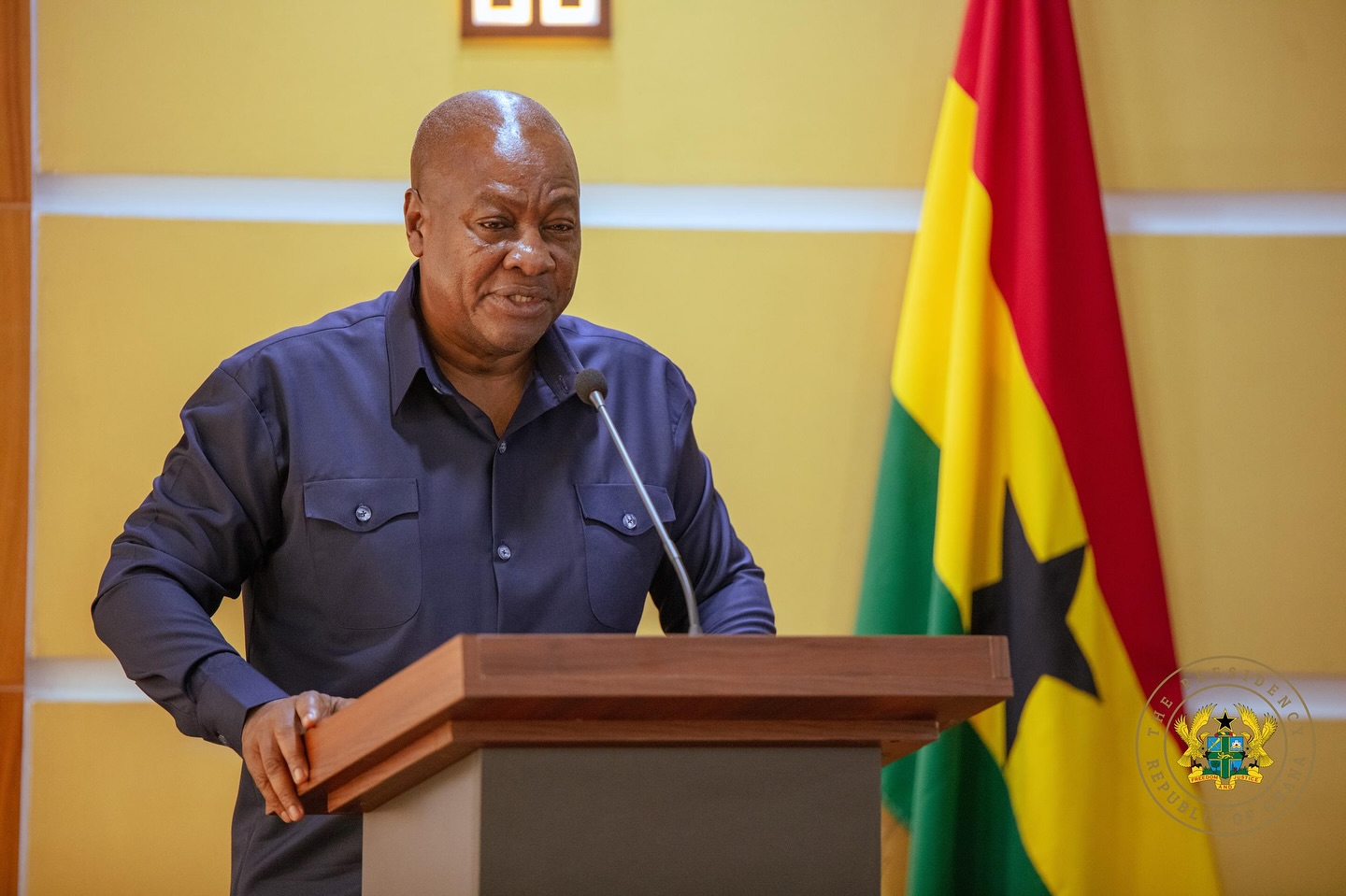
President John Dramani Mahama has attributed Ghana’s resilience to global energy shocks, including tensions in the Middle East, to the country’s strategic transition from liquid fuels to natural gas.

Speaking at a Presidential Dialogue with Civil Society Organisations at Jubilee House in Accra, the President said Ghana’s growing reliance on domestically sourced gas has significantly strengthened its energy security.
“The current resilience is because we are consuming more gas than fuel,” he stated.
Mahama highlighted progress made since his administration returned to office, particularly in boosting gas supply from the ENI Sankofa Field and the Jubilee Field.
He revealed that the World Bank-backed guarantee tied to the Sankofa project—previously depleted—has been restored to $500 million by the Finance Ministry. According to him, Ghana’s consistent payment for gas consumption has encouraged ENI to increase supply volumes.
In a major development, the President announced that a Memorandum of Understanding has been signed with partners in the Jubilee Field to invest an additional $2 billion to drill nearly 30 new wells, aimed at boosting gas output.
However, he acknowledged a key infrastructure challenge, noting that the existing gas processing facility at Atuabo Gas Processing Plant cannot handle the anticipated increase in supply.
To address this, Mahama said plans are underway to construct a second gas processing train to accommodate the additional volumes. Once completed, he explained, Ghana’s thermal power plants will run entirely on gas, reducing reliance on liquid fuels.
Linking energy policy to global developments, the President pointed to ongoing tensions involving Iran and disruptions along the Strait of Hormuz, which have affected liquefied natural gas exports from Qatar and other Middle Eastern producers.
“Luckily, we have security of gas because it is our own resource,” Mahama said. “That is what has ensured our safety and strengthened our resilience.”
He further disclosed that ENI has agreed to invest an additional $1.5 billion in new wells in the offshore Cape Three Points area, with a formal agreement expected soon.
Looking ahead, Mahama expressed confidence that increased gas production could position Ghana as a regional energy hub, with the potential to export electricity to countries such as Burkina Faso and other neighboring states facing power shortages.


