


By Dickson Adom, PhD

Introduction
The world is steadily transitioning toward a profound shift in legal, ethical, just, and ecological justice. An important transition that recognizes rivers not merely as property but as living entities with inherent rights to exist, thrive, and regenerate. This new turn, gaining traction globally, is not a mere philosophy but a practical reality transforming governance and protection outcomes of inhumanely treated rivers. Today, in a spirit of care and harmonious relationship with nature, rivers have been recognized in law as rights-bearing entities with a range of legal rights and protections across various jurisdictions (O’Donnell, 2020). This global shift of granting rivers rights offers Ghana a timely and urgent lesson. At the center of this call is the Gyeme River in the Atatem community, in the Adansi-Asokwa District of the Ashanti Region, Ghana.
The Cry of Gyeme: “Save Me”

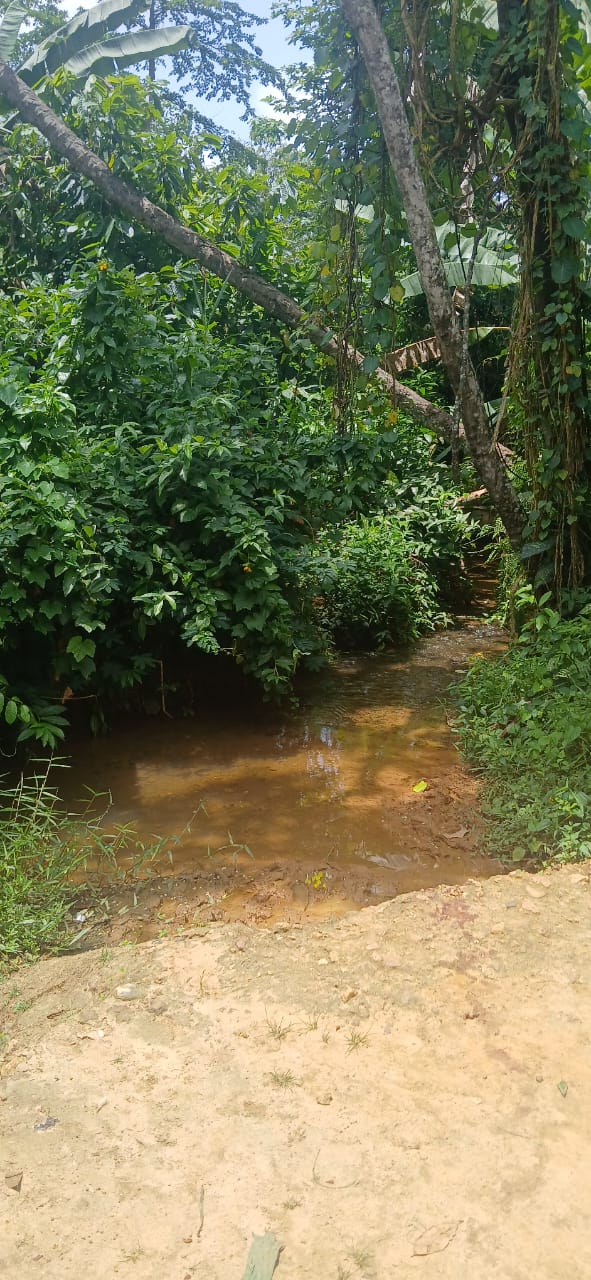
‘Gyeme’, which in the Asante Twi language means ‘Save me’, is not just a river that naturally offers water to ecosystems. It is a living deity embedded in the cultural, spiritual, and ecological life of the Atatem people. Oral histories recounted by the Atatem people exemplify how the Gyeme deity guided their ancestors to their current settlement, ‘Atatem’, which means a more expansive area naturally endowed with rich natural elements. The community’s landmass is rich in fertile lands, forests, and clean water. For several generations, the elders have religiously honored and kept the statutes of Gyeme. Hence, they have received his protection. Community members recount how the Gyeme deity, living up to his name, has protected them from disease, famine, and conflict through the sacred relationship the community maintains with him. Today, that relationship and its allied benefits are under severe threat due to the looming presence of illegal mining known as galamsey. Galamsey activities on the surge are polluting the River and his tributaries. In response to this worrying development, the community, in collaboration with the Rights of Nature Ghana Movement (RoNAG), has developed the Gyeme River Rights and Protection By-law, now before the Adansi-Asokwa District Assembly, with other relevant national agencies copied, alongside a petition to the National Anti-Illegal Mining Operations Secretariat (NAIMOS) to halt the ongoing high forms of criminality against ecosystems, including the Gyeme River. Daily calls from community members, especially elders, reflect not only concern but urgency. Community members fear that contamination will sever their sacred and harmonious relationship with the River, potentially driving away the river deity from the community. According to the Atatem people, this will result in devastating consequences for their spiritual, cultural, social, and economic lives.
What the Science and Law say about River Rights
The phenomenon faced by the Atatem community is not an isolated cultural claim but backed by scientific evidence with strong legal implications. Cano Pacharroman (2018) posits that recognising the rights of nature allows ecosystems to stand in court and be represented (usually by guardians) for their defense. Commendably, countries such as Ecuador, New Zealand, India, and Colombia have granted rivers legal personhood to combat environmental degradation (Magallanes, 2019). Scholars who advocate for ecocentric thinking and legal pathways argue that this shift in environmental law, which is often Western-centric and anthropocentric, away from treating nature as a mere resource, instead recognises her intrinsic value and agency (Edirisinghe & Suchet-Pearson, 2024). Granting legal rights to rivers creates a new governance system that can improve environmental protection and accountability (Talbot-Jones & Bennett, 2019) for rivers that have suffered the worst harms, tantamount to ecocide. Interestingly, these legal innovations are not actually, as I put it, ‘from the scratch legal innovations’ because they are rooted in indigenous worldviews, where natural elements such as rivers are seen as living beings and relatives and not as objects to exploit (Adom, 2025; Gross, 2021).
Indigenous Knowledge: Ghana Already Knows This Path
Before the advent of modern environmental law, Ghanaian communities practiced ecological governance through various cultural practices. Various traditional ‘legal’ (oral, written, and endorsed by traditional systems) frameworks, such as taboo systems, folklore, myths, and cosmological beliefs, were effective conservation strategies that protected the rights of ecological beings, such as rivers, and in many sacred sites referred to as Nananom mpow (Adom, 2018a). I have researched how this traditional ecological knowledge, yes, how this ancestral wisdom has protected ecological beings such as Lake Bosomtwe (Adom, 2018b), Anankwari River and Whin River on the Sekondi Harbour (Adom, 2019a), Tano River (Adom, 2019b). This is the key idea behind the Rights of Nature concept and thus not ‘foreign’ to Ghana and, by extension, Africa. It is only a re-articulation of the environmental epistemology of our intelligent forebears for maintaining harmonious, respectful, and interdependent relationships between humans and other ecological beings on Mother Earth. The deep reverence for the Gyeme deity parallels other global examples where spiritual ecology informs legal recognition. Studies on river personhood highlight how religious and cultural understandings of rivers as living beings have influenced legal reforms globally (Alley, 2019).
A National Call to Action: River Rights for Ghana
The plight of the Gyeme River mirrors the broader environmental crisis confronting Ghana. Major rivers that are the lifeblood of various Ghanaian communities, such as the Pra, Offin, Ankobra, Tano, Densu, Oti, Bia, Ayensu, Tordzie, and Owabi, are severely contaminated by illegal mining and other destructive activities. To safeguard these vital lifelines, Ghana must act decisively. I call upon the Adansi-Asokwa District Assembly to approve the Gyeme River Rights and Protection By-law. NAIMOS and regulatory agencies should immediately work to halt all mining activities that threaten the River. The Environmental Protection Agency (EPA) and the Water Resources Commission should enforce stringent protections of the River from encroachment and contamination. Parliament and the Ministry of Lands and Natural Resources should explore national legislation recognizing the Rights of Nature for Rivers and other ecological beings that perform essential ecological functions, sustaining human life and maintaining the resilience of ecosystems. Such actions will affirm Ghana’s commitment to environmental justice, cultural heritage, and sustainable development.
A Future Rooted in Harmony with Nature
The protection of the rights of the Gyeme River should not be a local concern but rather a national priority. It is a symbolic gesture of an important return to ancestral wisdom. It would mean we are mirroring the path of our forebears who lived in reverence and harmony with nature. This important step represents Ghana’s opportunity to join a global movement dedicated to preserving life on Mother Earth.
Protecting the Gyeme River is not merely a local concern; it is a national imperative. It symbolizes a return to the wisdom of our forebears, who lived in reverence and balance with the natural world. It also represents Ghana’s opportunity to join a global movement dedicated to preserving life on Earth. Heeding the Gyeme River’s call for redemption will ensure peaceful coexistence with members of the Atatem community, ecological stability, and prosperity not just for the present generation but for generations yet unborn. Failure to act risks losing not only a river but also a vital aspect of the Atatem community’s cultural heritage, identity, and history. The time to act is now. Let the Gyeme River live!
References
Adom, D. (2025). Stop the Impending Ecocide against Nature: Revisiting Ghanaian Indigenous Sensibilities and Setting the Tone for a Rights of Nature Ghana (RoNAG) Movement. U.S.A.: Center for Democratic and Environmental Rights, URL: https://www.centerforenvironmentalrights.org/news/guest-essay-the-rights-of-nature-ghana-movement
Adom, D. (2018a). Traditional Cosmology and Nature Conservation at the Bomfobiri Wildlife Sanctuary of Ghana. Nature Conservation Research, 3(1): 23-44
Adom, D. (2018b). The Human Impact and the Aquatic Biodiversity of Lake Bosomtwe: Renaissance of the Cultural Traditions of Abono (Ghana)? Transylvanian Review of Systematic and Ecological Research, 20(1): 87-110
Adom, D., Appiah, P. S. & Yarney, L. (2019a). A Return to the Ghanaian Cultural Values of Closed Season in Ghana’s Artisanal Marine Fishing: An Essential Means of Restoring Small Pelagic Stocks. Rev. Syst. Ecol. Res., 21(3): 95-110
Adom, D. (2019b). Dietary Taboos as a Means of Ethnic and Place Identity of the Bono People of Ghana: Indirect Cultural Practices for the Conservation of Fauna Species. International Journal of Conservation Science, 10(4): 733-748
Alley, K. D. (2019). River Goddesses, Personhood and Rights of Nature: Implications for Spiritual Ecology. Religions, 10(9), 502. https://doi.org/10.3390/rel10090502
Begum, A., Liu, J., Liu, J., Qayum, H., & Mamdouh, A. (2022). Environmental and Moral Education for Effective Environmentalism: An Ideological and Philosophical Approach. International Journal of Environmental Research and Public Health, 19(23), 15549.
Cano Pecharroman, L. (2018). Rights of Nature: Rivers That Can Stand in Court. Resources, 7(1), 13. https://doi.org/10.3390/resources7010013
Erin O’Donnell (2020). Rivers as living beings: rights in law, but no rights to water? Griffith Law Review, 29(4), 643–668, DOI: 10.1080/10383441.2020.1881304
Edirisinghe, A. & Suchet-Pearson, S. (2024). Nature as a sentient being: Can rivers be legal persons? Review of European, Comparative and International Environmental Law, 33(2), 224–235. https://doi.org/10.1111/reel.12529
Gross, M. (2021). Reclaiming nature’s rights. Current Biology, 31(23), R1505–R1512, https://doi.org/10.1016/j.cub.2021.11.044
Magallanes, C. I. (2019). From Rights to Responsibilities using Legal Personhood and Guardianship for Rivers IN Martin, B., Te Aho, L. & Humphries-Kil, M. (eds). Responsibility: Law and Governance for Living Well with the Earth (Routledge, London, 2019), 216-239.
Talbot-Jones, J. & Bennett, J. (2019). Toward a property rights theory of legal rights for rivers. Ecological Economics, 164, 2019,106352, ISSN 0921-8009, https://doi.org/10.1016/j.ecolecon.2019.06.007
The Author: Dickson Adom, PhD is a Senior Member, Department of Educational Innovations in Science & Technology, Kwame Nkrumah University of Science and Technology, Ghana, & Convenor, Rights of Nature Ghana Movement.
- mail: [email protected] / [email protected]
Orcid: https://orcid.org/0000-0002-0559-4173


