


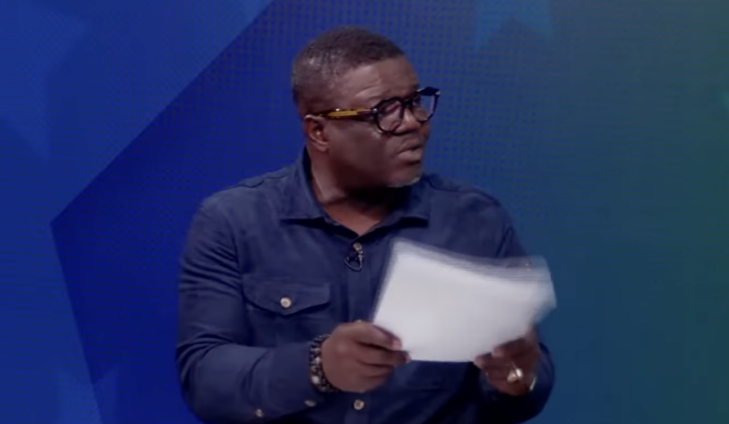
Majority Chief Whip and South Dayi MP, Rockson-Nelson Dafeamekpor, has defended President John Mahama’s recent remarks on the Human Sexual Rights and Family Values Bill, insisting that the President remains committed to signing the legislation once all parliamentary procedures have been completed.

His comments follow President Mahama’s engagement at Chatham House in London, where he stopped short of explicitly stating whether he would assent to the bill if it reached his desk. Instead, the President outlined the constitutional and administrative processes that would precede any final decision.
The remarks sparked public debate, with some critics questioning whether the President remains committed to fulfilling a key campaign promise.
Speaking on JoyNews’ PM Express on Monday, Dafeamekpor dismissed those concerns, arguing that Mahama’s comments were entirely consistent with parliamentary and constitutional procedures.
“The President’s reference to the fact that Parliament will still clean up the bill before it gets to him is in order,” he said.
According to Dafeamekpor, the bill is currently undergoing post-passage scrutiny and drafting, a parliamentary process that consolidates and incorporates all approved amendments into the final version before it is transmitted to the Presidency.
He explained that once a bill has been read a third time and passed, all amendments must be properly organised and integrated into the final text before it can be forwarded for presidential assent.
Dafeamekpor also rejected suggestions that the President’s reluctance to immediately declare his intention to sign the bill indicates any hesitation.
“The President was simply outlining the constitutional options available to him once the bill reaches his office,” he said.
Drawing comparisons with former President Nana Akufo-Addo’s handling of the legislation, Dafeamekpor noted that one criticism levelled against the former President was his failure to invoke constitutional provisions that would have allowed him to return the bill to Parliament with recommendations.
“One of the criticisms against President Akufo-Addo is that even when he objected to assenting to it, he ought to have triggered the provision that empowered him to refer the bill back to Parliament with a recommendation. He didn’t do that,” he stated.
When asked whether Mahama had given assurances that he would ultimately sign the bill, Dafeamekpor expressed confidence in the President’s commitment.
“Look, I have engaged the President privately on the matter. I have engaged him in a group. We have engaged him as parliamentary leadership, as a caucus, and as a party. He’s committed,” he said.
He stressed that the bill formed part of the National Democratic Congress’ campaign promises and maintained that the President would honour that commitment.
“Remember, he was our flagbearer before he became President. It was part of our campaign promise. He will sign it, and I’m telling you, the President won’t shy away from it.”
Dafeamekpor further revealed that Mahama had previously assured members of the clergy that the bill would be signed.
“He made a promise to the clergy that it will be signed. He’s not walking away from that,” he added.
The Majority Chief Whip also dismissed the Minority’s challenge to the bill’s passage, describing claims that Parliament lacked the required quorum as unfounded.
“The quorum reference by the President was as a result of the empty storm that the Minority are generating,” he said, insisting there was no evidence to support allegations that Parliament did not have the numbers required to pass the legislation.
According to Dafeamekpor, the post-passage scrutiny process is expected to be completed within one to two weeks.
“It’s quite a skeletal bill. The post-passage scrutiny may be completed in a week or two,” he said.
“I expect it will be remitted to the President’s office within a week or two. When that is done, he will sign it.”
This version improves flow, eliminates repetition, and adopts a more formal news-reporting style while preserving the substance of the original remarks.


