


By Alfred Asamoah
MTN Ghana has organised a hands-on artificial intelligence (AI) training workshop for media practitioners and civil society organisations (CSOs), equipping participants with practical skills to use AI tools effectively while safeguarding accuracy, privacy and professional credibility.
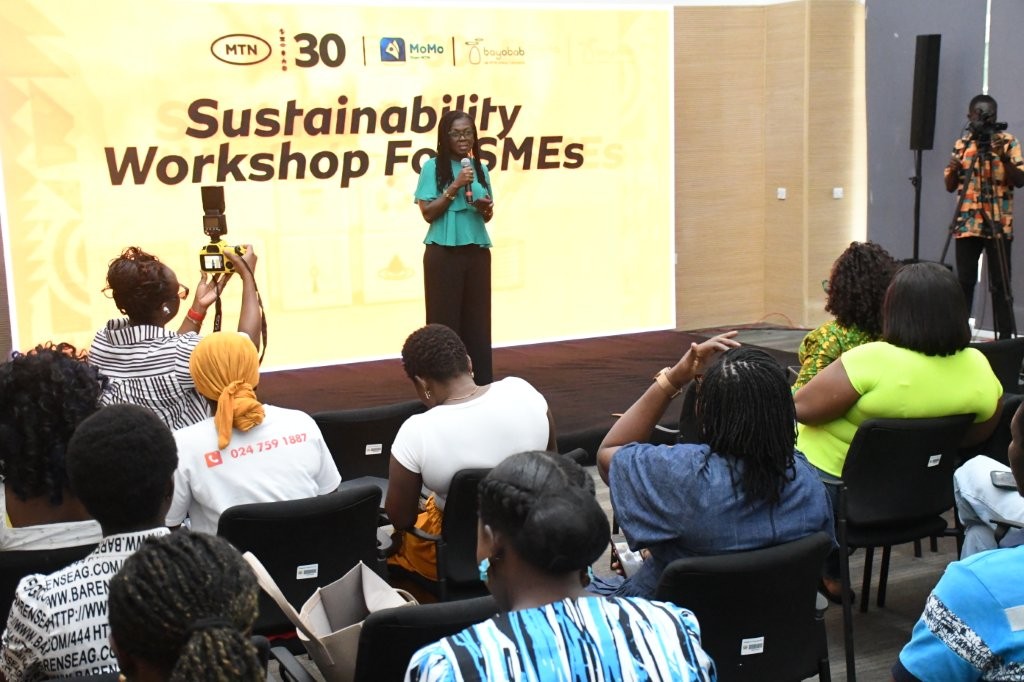
The training, held on Monday, August 24, 2026, at MTN House, brought together journalists and representatives of civil society organisations for an interactive session focused on the responsible integration of AI into journalism, communication and other professional activities.
The workshop was facilitated by Samuel Adranyi, a Software Engineer, Blogger, Speaker, Streamer, Technology Advocate, Community Lead and AI and Internet of Things (IoT) enthusiast, and Nehemiah Yelu Attigah, Chief Executive Officer of Hatua Tech Ltd. The facilitators took participants through practical demonstrations on how AI tools can be used to improve research, content development and everyday professional workflows.
A key focus of the training was AI prompting, with participants learning how to structure clear and specific instructions to obtain more relevant and accurate responses from AI platforms. The facilitators demonstrated how the quality of a prompt can influence the quality of the information generated, encouraging journalists to provide appropriate context, clear instructions and specific requirements when interacting with AI tools.
Participants were also introduced to different approaches to developing effective prompts and were encouraged to critically assess the responses generated by AI rather than accepting them as automatically accurate. The facilitators stressed that AI should serve as a supporting tool for journalists and not replace professional judgement, editorial responsibility or human decision-making.
Information verification also featured prominently during the training. Journalists were advised to independently verify AI-generated information using credible and authoritative sources before incorporating such material into news reports. The facilitators noted that AI systems can sometimes produce inaccurate, incomplete or misleading information, making verification an essential part of the reporting process.
The training further highlighted the importance of data privacy and responsible information handling when using AI platforms. Participants were cautioned against entering sensitive personal, confidential or private information into AI tools unnecessarily. They were encouraged to exercise caution when sharing information with AI systems and to understand the potential implications of submitting sensitive data to such platforms.
The facilitators also discussed how AI can support journalists in areas such as research, drafting, summarising documents, analysing information and improving productivity. However, participants were reminded that the use of AI does not remove the journalist’s responsibility to ensure that information published is accurate, fair, properly sourced and capable of withstanding public scrutiny.
The engagement comes at a time when AI is rapidly changing how information is created, processed and consumed, creating both opportunities and challenges for the media and civil society. The workshop therefore emphasised the need for practitioners to embrace emerging technologies while maintaining the ethical standards and professional principles that underpin credible journalism.
The training ultimately encouraged participants to view AI as a tool that can strengthen their work when used responsibly. Through effective prompting, careful verification, protection of sensitive information and continued human oversight, media practitioners and CSOs were urged to harness the benefits of AI without compromising public trust, professional integrity or the credibility of the information they provide…..


