


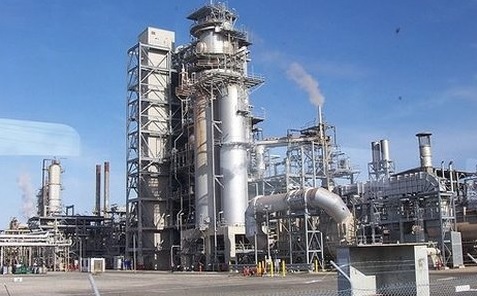
The recovery of the Tema Oil Refinery (TOR) has created 1,657 permanent and temporary jobs, while more than 6,500 additional workers have been engaged during turnaround maintenance, Managing Director Edmond Kombat has disclosed.

He said the employment opportunities formed part of the wider economic benefits of restoring operations at the state-owned refinery following years of operational difficulties.
Speaking at the Government Accountability Series at Jubilee House on Monday, October 26, 2026, Mr Kombat said the recovery programme had opened up employment opportunities for young engineers, technical workers and local contractors.
He disclosed that 415 young engineers had been recruited into permanent positions, while 301 temporary workers were engaged for maintenance of the Crude Distillation Unit (CDU) and another 287 for work on the Residue Fluid Catalytic Cracking (RFCC) unit.
An additional 654 workers were employed by 35 local contractors operating at the refinery.
“TOR’s recovery has created 1,657 permanent and temporary jobs,” he said.
Mr Kombat added that the turnaround maintenance programme had generated employment beyond the refinery’s direct workforce.
“In effect, direct employment for 1,657 Young Ghanaian Engineers, and more than 6,500 indirect and temporary workers were engaged during the turnaround works,” he stated.
He said the figures demonstrated the potential of the refinery’s recovery to stimulate job creation and economic activity.
Restoring operations after years of shutdowns
TOR had experienced significant operational challenges before the current management assumed office in May 2025. The refinery’s CDU had been shut down since April 2021, while the RFCC unit had remained inactive since 2019.
The shutdown of the major processing units had largely restricted the refinery’s activities to storage services, limiting its ability to perform its core function of processing crude oil.
In response, management introduced Project Restore TOR, which prioritised rehabilitating and restarting the CDU, strengthening financial controls and rebuilding confidence among workers and business partners.
Mr Kombat said management had also addressed more than 300 outstanding staff petitions and promotion-related cases, some of which had remained unresolved for over a decade.
He added that measures to improve staff welfare included reviewing conditions of service, job descriptions and performance-management systems.
Further expansion planned
The refinery’s recovery programme also covers additional work on the RFCC unit, boiler systems, crude-heating equipment and other infrastructure aimed at improving operational capacity.
Mr Kombat said the planned expansion of TOR would create further economic opportunities as Ghana seeks to increase its domestic refining capacity.
He disclosed that management intended to pursue additional development projects, including a new refinery, petrochemical facilities and expanded storage capacity.
According to him, the broader objective is to establish a more sustainable refinery capable of supporting employment, strengthening industrial development and contributing to Ghana’s energy security.


