


Story By: Dennis Ato Keelson

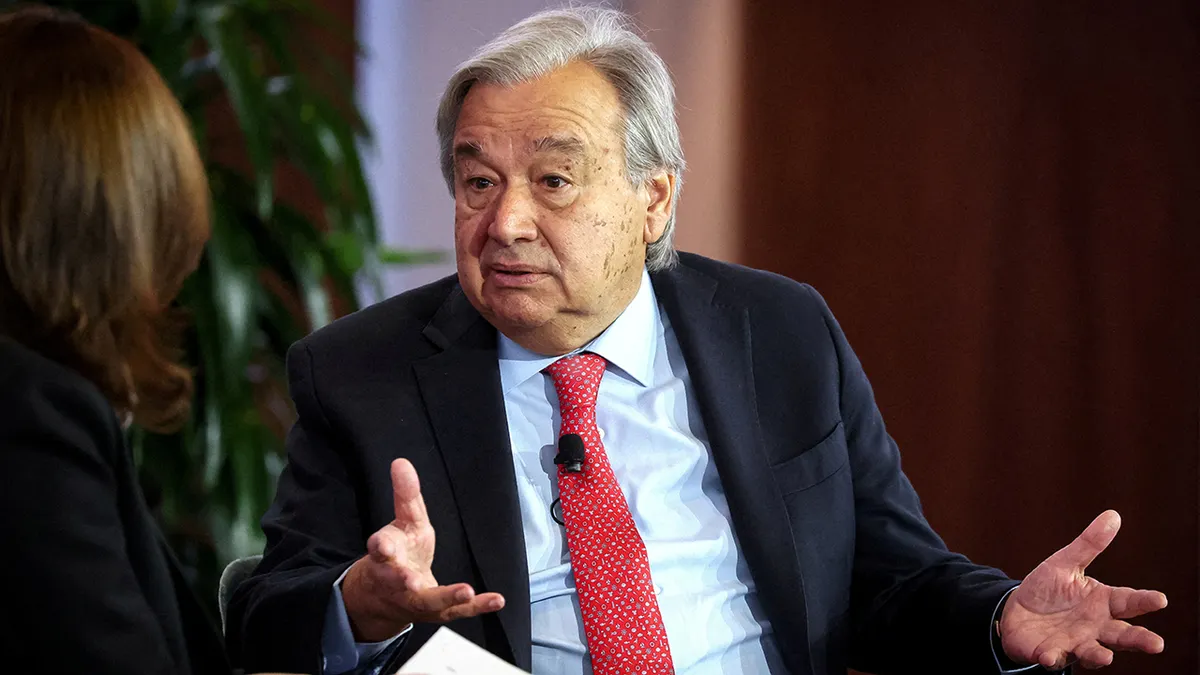
In a stark address to world leaders at the Belém Climate Summit, the United Nations Secretary-General, António Guterres, has delivered a grim assessment, stating that temporarily exceeding the critical 1.5°C global warming limit is now “inevitable” but must be met with a “paradigm shift” to avert catastrophe.
Echoing Brazilian President Lula’s description of this conference as the “COP of truth,” the Secretary-General presented the hard facts from the scientific community. He warned that even a temporary breach of the 1.5°C threshold, expected by the early 2030s, could push ecosystems past “irreversible tipping points,” expose billions to unlivable conditions, and amplify global threats to peace and security. He labeled the situation a “moral failure and deadly negligence.”
Despite this dire outlook, the UN leader insisted that the 1.5°C goal remains a “red line for humanity” and must be kept within reach. He outlined a plan to make the overshoot “as small, as short, and as safe as possible,” which requires peaking global emissions immediately, reaching net zero by 2050, and massively scaling up investments in adaptation.
While acknowledging the progress of a clean energy revolution that is “winning on price, performance, and potential,” the Secretary-General identified the primary obstacle as a crippling lack of political courage. He took direct aim at the fossil fuel industry, accusing corporations of “making record profits from climate devastation” and spending billions on “deceiving the public and obstructing progress.”
He called for this COP to “ignite a decade of acceleration and delivery,” laying out a clear path forward. He demanded countries agree on a bold plan to close the ambition gap, which must include turning the promise to transition away from fossil fuels into concrete action with “no more greenwashing” and “no loopholes.”
Central to this effort, he stated, is demonstrating a credible path to delivering the $1.3 trillion in annual climate finance for developing countries agreed upon in Baku, with developed nations leading the mobilization of $300 billion each year. “It’s no longer time for negotiations,” he stressed. “It’s time for implementation, implementation and implementation.”
Finally, he insisted that developing countries must leave Belém with a concrete climate justice package, ensuring adaptation finance is scaled up and delivered, the Loss and Damage Fund is operationalized, and Indigenous Peoples are empowered to lead the way.
The Secretary-General concluded with a powerful ultimatum to the assembled leaders: “We can choose to lead – or be led to ruin.” He urged them to “stand with science, stand for justice,” and make the Belém summit a true turning point for the planet.


