


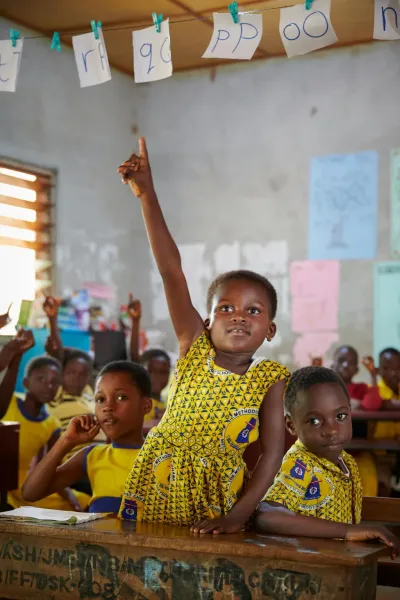
A new UNICEF report has revealed that Ghana’s public spending on children is heavily concentrated in later childhood, leaving critical early years underfunded despite evidence that investments during this period generate the greatest long-term benefits.

The report, Unlocking Potential Early: Rebalancing Public Spending for Children in Ghana, highlights that although Ghana has recorded notable improvements in child wellbeing, current spending patterns do not adequately support children during their most formative years.
According to the study, children aged between zero and five years receive only 13 per cent of total public spending on children, despite representing nearly one-third of Ghana’s child population. The report notes that, compared with high-income countries, Ghana allocates relatively less funding to prenatal care and early childhood development while spending remains concentrated later in a child’s life.
Education continues to receive the largest share of child-focused expenditure, accounting for 3.1 per cent of GDP in 2023. By comparison, social protection receives just 0.23 per cent of GDP, health expenditure stands at approximately 2 per cent, and child protection receives only 0.03 per cent.
Despite these disparities, Ghana has achieved outcomes that surpass the Sub-Saharan African average in several key areas. Immunisation coverage stands at 95 per cent, significantly higher than the regional average of 74 per cent. Under-five mortality is nearly half the regional average, while pre-primary school enrolment, at 88.1 per cent, ranks among the highest in the region.
However, UNICEF cautions that significant challenges remain, particularly in child poverty, nutrition, birth registration and protection from violence.
Presenting the findings, lead researcher Dominic Richardson warned that insufficient investment in essential support systems undermines children’s overall development.
“If you don’t have healthcare systems, some children will be too sick to go to school. When you don’t have child protection, more children end up in child labour,” he said.
The report argues that sustainable progress requires balanced investments across healthcare, social protection, nutrition, childcare and education to address the interconnected challenges affecting children and families.
Mr. Richardson recommended the implementation of Ghana’s recently approved Early Childhood Care and Development Policy, alongside the introduction of a universal child benefit scheme, as key measures to improve equity and outcomes for children.
UNICEF estimates that increasing and rebalancing child-focused spending to approximately 7.2 per cent of GDP could produce far-reaching benefits, including the elimination of child poverty within three years, the prevention of up to 18,000 premature child deaths, reductions in stunting, near-universal birth registration and improved school readiness among young children.
The agency believes that the rollout of the Early Childhood Care and Development Policy presents a significant opportunity for Ghana to align public spending with its commitments to children and potentially serve as a model for child-centred investment across Africa.


