


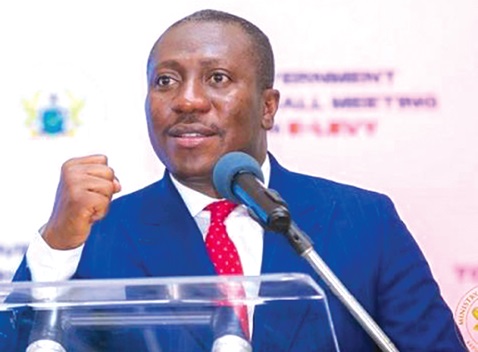
Minority Leader Alexander Afenyo-Markin has raised concerns about Ghana’s current fiscal environment, warning that a combination of high interest rates, rising utility costs, and a complex tax system is placing unbearable pressure on the private sector.

Speaking at the Kwahu Business Forum on April 3, 2026, he argued that government’s job creation agenda is being undermined by economic conditions that make it difficult for small and medium enterprises (SMEs) to survive.
Drawing on recent engagements with the Ghana Union of Traders Association and the Association of Ghana Industries, Afenyo-Markin highlighted the growing challenges faced by businesses, particularly young entrepreneurs.
He criticised lending conditions in the banking sector, noting that high interest rates are discouraging investment.
“You cannot preach entrepreneurship while charging an entrepreneur twenty-five per cent interest on a loan to buy their first equipment,” he said.
The Minority Leader also pointed to escalating electricity tariffs as a major burden, especially for small businesses that rely on refrigeration and other power-dependent tools.
“You cannot encourage someone to start a food business and then impose electricity costs that make basic operations unviable,” he added, describing the situation as counterproductive to economic growth.
He identified what he called a “triple threat” confronting the private sector: the high cost of capital, increasing utility bills, and multiple overlapping taxes that complicate compliance and reduce business liquidity.
According to him, current policies fail to consider the cumulative impact of these pressures on individual businesses, particularly SMEs.
Afenyo-Markin indicated that the Minority in Parliament will push for reforms aimed at easing the financial and regulatory burden on local enterprises, stressing the need for a more supportive environment to drive entrepreneurship and economic development.


