


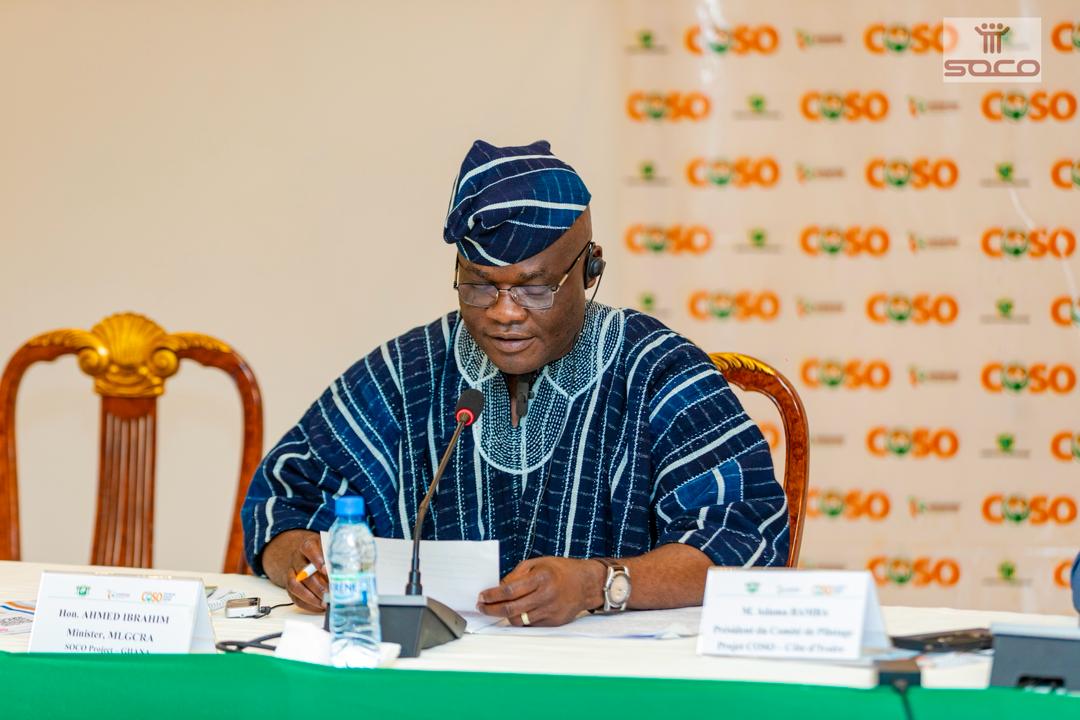
The Minister for Local Government, Chieftaincy and Religious Affairs, Ahmed Ibrahim, has called for deeper regional collaboration among Gulf of Guinea countries to address rising insecurity, climate pressures, and economic vulnerabilities affecting border communities.

Speaking at the SOCO Regional Conference in Côte d’Ivoire, the Minister stressed that the challenges confronting countries along the northern corridor—ranging from terrorism threats to limited economic opportunities—require coordinated and collective action.
He noted that recent incidents, including attacks on Ghanaian traders travelling across borders, highlight how insecurity in one country can easily spill over and affect livelihoods across the sub-region.
“No nation can confront these risks alone. Our collective safety rests on cooperation, shared responsibility, and coordinated regional action,” he said.
Mr Ibrahim explained that addressing insecurity must go beyond military responses, emphasising the need for investment in jobs, local economies, and community systems, particularly for young people who remain vulnerable to recruitment by extremist groups.
He also pointed to climate change as a growing threat, noting that changing rainfall patterns and declining agricultural productivity are worsening livelihoods in northern Ghana and the wider Sahel region. He stressed the importance of inclusive interventions that prioritise women and youth, who are often the most affected.
Highlighting Ghana’s experience under the Gulf of Guinea Northern Regions Social Cohesion (SOCO) Project, the Minister said the initiative has reached about 1.5 million people across 48 districts, delivering critical infrastructure and economic support to vulnerable communities.
According to him, nearly 950 infrastructure projects have been completed, alongside support for over 1,500 economic groups engaging more than 46,000 beneficiaries—most of them women and youth.
“When communities see development around them and young people have work, tensions reduce and cooperation improves,” he noted.
Mr Ibrahim said such interventions have helped strengthen social cohesion and stability in border areas, reducing the risk of conflict and economic exclusion.
He urged participating countries and development partners, including the World Bank, to deepen collaboration and scale up investments aimed at transforming vulnerable border communities into centres of opportunity.
Ghana, he added, remains committed to working with neighbouring countries to promote peace, resilience, and inclusive development across the Gulf of Guinea region.


