


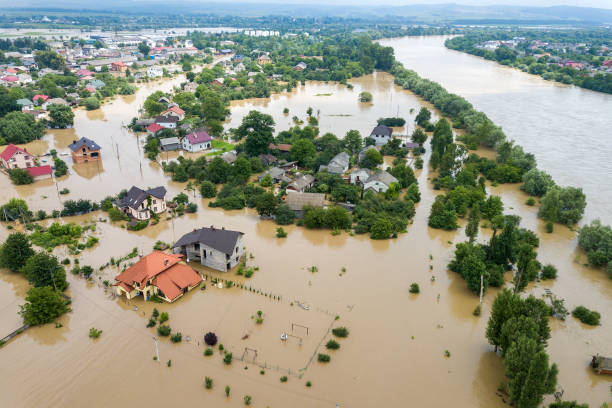
A probe report on the 2023 Akosombo Dam spillage has exposed critical lapses in Ghana’s disaster preparedness and response mechanisms.

The report revealed that the flood disaster displaced 38,624 residents, destroying homes, farmlands, and infrastructure in the lower Volta basin, including Mepe, Battor, Sogakope, Mafi, Adidome, Kpong, and Ada.
The five-member committee, chaired by senior officials from both the government and the Volta River Authority (VRA), called for immediate policy reforms to avert future catastrophes.
Between September 15 and October 30, 2023, the VRA conducted controlled water releases from the Akosombo and Kpong dams after water levels rose to perilous heights, threatening the dams’ structural integrity.
Although these spillages were deemed essential, they caused devastating floods, displacing residents and destroying homes, farmlands, and infrastructure.

Emergency operations led by the National Disaster Management Organisation (NADMO) and the VRA, alongside government relief distributions, mitigated immediate suffering.
However, the committee’s report highlighted a glaring absence of coordinated flood-mitigation planning and insufficient early-warning systems.
It also called for a comprehensive national disaster management strategy, improved inter-agency communication, and investment in resilient infrastructure.
President John Dramani Mahama has acknowledged the enduring hardships faced by flood victims and confirmed that compensation payments are forthcoming.
He pledged to release a government action plan derived from the committee’s recommendations “in the coming weeks,” underscoring the need for accountability and strengthened community safeguards against future events.
The report’s recommendations aim to ensure that controlled spillages no longer translate into humanitarian crises but instead trigger swift, well-coordinated responses that protect vulnerable populations.
Stakeholders hope that its adoption will inform legislative revisions and institutional reforms, strengthening community safeguards against future events.
Key findings included factors determining water spillage, such as reservoir elevation, rainfall, and energy output from the power plant.
The Akosombo Dam recorded a maximum water inflow of 477,984 cubic feet per second on September 18, 2023. The committee also noted operational challenges, community challenges, and the need for enhanced emergency response protocols and community engagement.
The committee’s report again highlighted the importance of addressing the concerns of affected communities, including issues related to resettlement, compensation, and livelihood support.
Story By: Dennis Ato Keelson


