


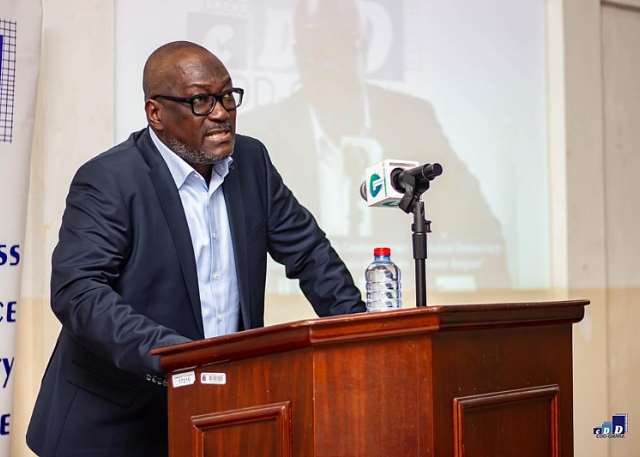
Executive Director of the Ghana Center for Democratic Development (CDD-Ghana), Prof. Henry Kwasi Prempeh, has welcomed the Supreme Court’s decision striking down the delegate system used by political parties to elect their presidential and parliamentary candidates, describing it as a major boost for Ghana’s democracy.

Speaking in an interview on Woezor TV on Sunday, August 2, Prof. Prempeh said the ruling had spared the country the financial burden of holding a national referendum to amend entrenched constitutional provisions.
“At least I am happy that the court has pre-empted it because it saved us some money. To change this, these are entrenched provisions. You have to go to a referendum. The court, by pre-empting this and making that decision, has saved us some money — quite a bit of money actually,” he said.
Prof. Prempeh revealed that CDD-Ghana had long advocated the abolition of the delegate system, arguing that it weakens internal party democracy and creates opportunities for corruption during party primaries.
He explained that the organisation’s recommendation to abolish the system was made well before the legal challenge that eventually resulted in the Supreme Court’s ruling.
“We didn’t do this knowing that there would be a lawsuit. At the time we were doing this, there was no lawsuit,” he said.
According to Prof. Prempeh, although delegate-based elections are used in some democratic systems, CDD-Ghana concluded that Ghana’s experience had shown the model to be detrimental to democratic governance.
He said the organisation had consistently proposed replacing the delegate system with a one-member, one-vote electoral model to broaden participation, enhance internal democracy and reduce the influence of money in party elections.
“We took the position that, to advance our democracy, we needed to move beyond the delegate system to a one-person, one-vote within the parties,” he stated.
Prof. Prempeh expressed optimism that the Supreme Court’s decision would encourage political parties to adopt more inclusive and transparent methods of selecting their candidates, ultimately strengthening Ghana’s democratic system.


