


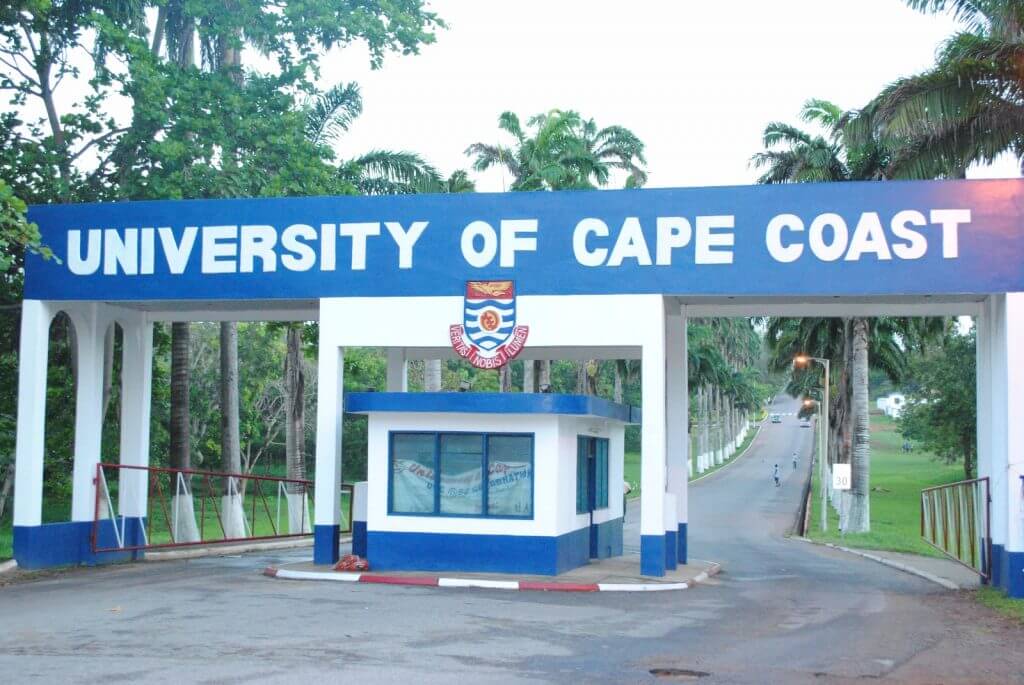
The University Teachers Association of Ghana (UTAG), University of Cape Coast (UCC) branch, has rejected a proposed policy by the Ghana Tertiary Education Commission (GTEC) to harmonise promotion guidelines for academic staff across public universities, describing the move as an unlawful intrusion into the governance of tertiary institutions.

In a statement issued on June 29, 2026, UTAG-UCC said the proposal exceeds GTEC’s statutory mandate and encroaches on powers reserved for university governing bodies under existing legislation.
“After careful consideration, UTAG-UCC wishes to state, in the strongest possible terms, its total and unequivocal rejection of the proposed harmonisation framework,” the association said, adding that the decision followed deliberations by its Local Executive Council on June 25.
According to the association, appointments and promotions of academic staff are core governance responsibilities of public universities and, under the laws establishing these institutions, fall within the authority of University Councils and Academic Boards rather than external regulatory bodies.
UTAG-UCC argued that although the Education Regulatory Bodies Act, 2020 (Act 1023) establishes GTEC as the national quality assurance and coordination body for tertiary education, the legislation does not empower the Commission to prescribe or standardise internal promotion processes across universities.
“GTEC’s statutory role is to regulate standards, promote quality assurance, coordinate national tertiary education policy and encourage best practice. It is not a parallel governing authority over public universities,” the statement said.
The association also challenged the justification for the proposed framework, arguing that differences in promotion criteria reflect the unique mandates, missions and academic structures of Ghana’s various universities.
It maintained that imposing a uniform promotion system would undermine institutional autonomy and academic excellence, particularly given the distinctions between comprehensive, specialised and technical universities.
“A comprehensive university, a specialised university and a technical university cannot reasonably be expected to evaluate academic excellence through identical criteria,” UTAG-UCC stated.
The association further called on GTEC to prioritise what it described as more pressing challenges confronting the tertiary education sector, including inadequate staffing, high student-to-lecturer ratios and insufficient infrastructure.
“The system is not broken and does not require this form of intervention,” the statement added.
UTAG-UCC has therefore demanded the immediate withdrawal of the proposed harmonisation framework and urged the government and the Ministry of Education to reaffirm the autonomy of public universities in matters relating to appointments and promotions.
It also declared that it would not participate in any consultation process premised on what it described as an “illegal and anti-academic policy.”
The latest position adds to growing opposition within the tertiary education sector. The University Teachers Association of Ghana’s Kwame Nkrumah University of Science and Technology (UTAG-KNUST) branch had earlier expressed similar reservations, arguing that the proposed framework lacks sufficient justification.


