


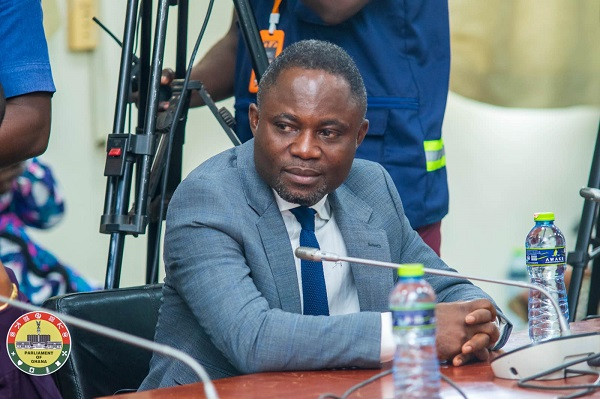
The Ministry of Health has announced plans to conduct a validation exercise to remove medical doctors who declined postings to deprived areas from the government payroll.

The Minister of Health, Kwabena Mintah Akandoh, issued the directive during a working visit to the University of Ghana Medical School last Friday, explaining that the exercise was necessary to address the persistent shortage and uneven distribution of doctors across the country.
He warned that doctors who fail to report to their assigned duty posts by the end of February would be removed from the payroll.
“By the end of February, we will do validation. If you have not reported, your name will be taken off the payroll and the slots will be opened for those who are willing to go,” he stated.
More than 700 medical doctors were posted to deprived communities across the country last year.
Addressing workforce gaps
Mr Akandoh acknowledged that some doctors have genuine concerns about accommodation and working conditions in remote areas but said the refusal to accept postings to districts without medical officers was unacceptable.
“There are districts in this country without a single medical doctor. We cannot govern like that,” he said, stressing that government postings are binding and not optional.
Policy interventions
During the visit, the Minister also outlined key policy initiatives, including the Ghana Medical Trust Fund, which he said is backed by legislation with a board and secretariat to support patients referred by specialists.
On equipment and logistics, he indicated that government plans to expand private sector participation through hospital equipment placement arrangements. Under this model, private providers would install equipment such as dialysis machines in health facilities and be paid per use through public health financing systems like the National Health Insurance Scheme.
“This way, government does not have to provide upfront funding for expensive equipment while facilities still get the services they need,” he explained.
Regarding stalled Agenda 111 hospital projects, the Minister acknowledged that completing more than 100 facilities within a short period was not feasible given current financial constraints. He said government was engaging corporate organisations to support completion of selected projects in exchange for tax incentives, after which the facilities would revert to the state following an agreed period.
Faculty shortages at UG
The Provost of the College of Health Sciences at the University of Ghana, Alfred Edwin Yawson, appealed for support to address a growing shortage of faculty, describing it as a major threat to the training of future medical specialists.
He noted that many experienced faculty members were ageing, retired or nearing retirement without replacement.
“Our key challenge is faculty. We are having very aged staff, and many of our most experienced faculty members are either retired or retiring, and they are not being replaced,” he said.
Simulation training expansion
Prof. Yawson also called for investment in simulation-based training to ease congestion in hospital wards used for clinical instruction.
“When we are congested in the wards, not all students need to be trained on real patients. We can use simulators,” he said, adding that expanding the simulation centre with more mannequins and specialised equipment would help increase student intake and improve training outcomes.


